- Phone answered 24/7, including nights, weekends and bank holidays
- Drainage across London, with plumbing alongside
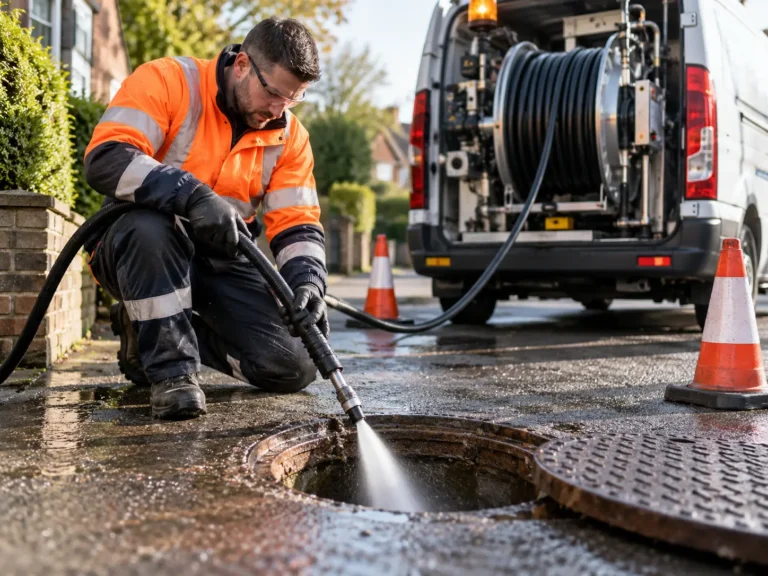
Jetting uses water at pressure, directed backwards through a nozzle, to pull a hose along the pipe and scour the walls as it goes. Done properly it leaves the drain at close to its original bore. Done carelessly it damages pipework that was already fragile.
A deposit lining the pipe that rodding has only channelled through. Jetting removes the coating itself.
Grease build-up. Far cheaper to jet on a schedule than to close mid-service.
Grit and leaf mulch. Jetting the gully and the connecting pipe resets it properly.
Rods cannot reach or cannot turn the bends. Jetting travels much further.
A cutting head clears fibrous ingress, and a camera then shows whether the joint needs repair.
Cement, sand and plaster set hard in a drain and rarely shift with rods.
A hose is fed into the drain with a nozzle on the end. Most of the jets face backwards at an angle, which does two things at once: the reaction drives the hose forwards along the pipe without anyone pushing it, and the jets strip deposits off the pipe wall and flush them back towards the access point where they can be removed.
Nozzle choice is the part that matters and the part that gets skipped. A penetrating nozzle cuts an initial channel through a solid blockage. A flushing nozzle with a wider spray cleans the wall behind it. A rotating nozzle handles hardened grease and scale. Root-cutting heads deal with fibrous ingress. Using one nozzle for every job is how the same drain ends up blocking again.
Jetting earns its place where the problem is a coating rather than an object: congealed fat in a kitchen run, silt and grit in a gully or a surface water drain, scale build-up, or fine root ingress through a joint. It also handles long runs and bends that rods simply cannot reach.
It is the wrong tool in some situations, and this is where care matters. A drain that is already cracked, displaced or partially collapsed can be made worse by pressure, because the water finds the fault and washes ground in through it. Old, corroded lead or pitch-fibre pipe is fragile. So is anything that has already been patch-lined badly. Where there is reason to think the pipe is compromised, a camera goes in first. Jetting blind into unknown pipework is how a blockage becomes an excavation.
On anything beyond a straightforward clearance we would rather look before and after. Before, because it tells us the pipe can take the pressure and shows us what we are dealing with. After, because it proves the drain is actually clean rather than merely flowing, and because it shows up any fault that the blockage was hiding: a cracked joint or a dip holding water is often only visible once the debris is gone.
For commercial premises this also gives you a record. If you are on a planned maintenance schedule, before-and-after footage is what demonstrates the work was done and tracks whether the line is deteriorating.
Water at jetting pressure is genuinely dangerous and it is not DIY equipment. It also has to go somewhere: on a shared or commercial system, jetting one line can push waste out at another opening, so the run needs to be understood before the hose goes in. We look at where the water will surface, cover what needs covering, and keep people back from open chambers while the hose is live.
Tell us the symptoms and your postcode. We will tell you what it sounds like, what it is likely to cost and whether it is even your responsibility.
If the blockage is on a shared drain or beyond your property boundary, it may be Thames Water’s to deal with rather than yours to pay for.
The things people ask most about drain jetting. If yours is not here, just call and ask.
Not sound pipework: pressure and nozzle are matched to the pipe. It can worsen a drain that is already cracked, displaced or collapsing, which is exactly why we survey first where there is any reason for doubt rather than jetting blind.
Rods push an object out of the way and make a channel. Jetting cleans the wall of the pipe. For a one-off obstruction close to an access point, rods are quick and fine. For build-up, a long run, or a drain that keeps blocking, jetting is the one that lasts.
Usually yes, if they are structurally sound: clay handles jetting well. The risk is not the material but its condition, and a lot of London clay pipework has open or displaced joints. That is what the camera tells us before we start.
It removes the roots that are there and restores flow. It does not close the crack or joint that let them in, so they are likely to come back. Jetting buys you time; lining or repairing the defect is what actually solves it.
It depends entirely on what goes down them. A busy kitchen may need it quarterly; an office block may be fine annually. We would look at your covers, your grease management and the condition of the line, then set a realistic interval rather than sell you a frequency.
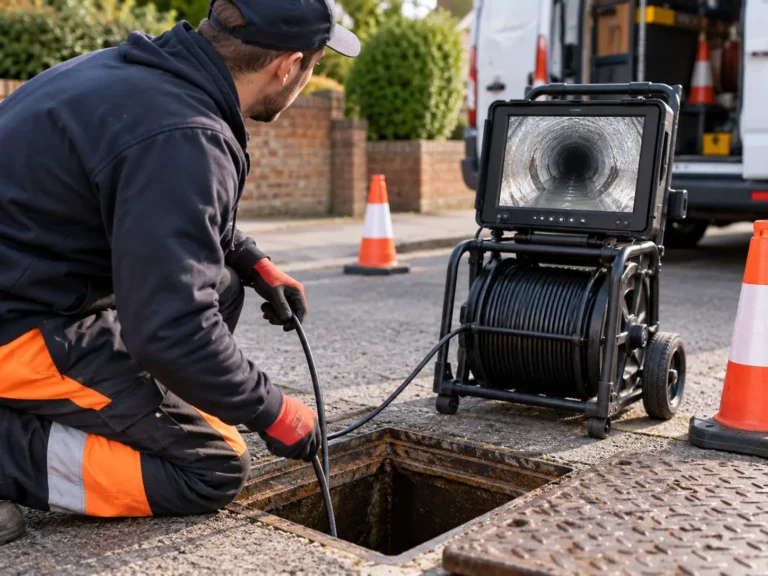
See the inside of the pipe: recurring blockages, pre-purchase checks, insurance and subsidence claims.
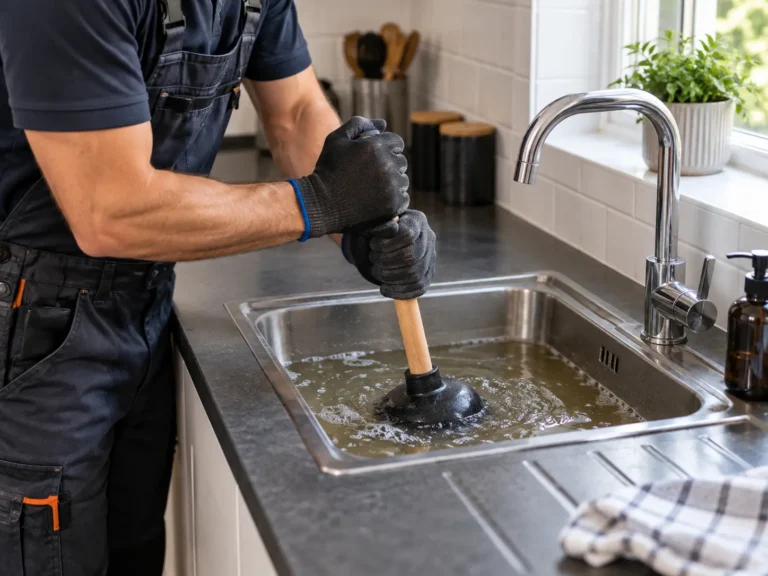
Kitchen sinks and waste pipes blocked with grease, cleared properly rather than just poked through.
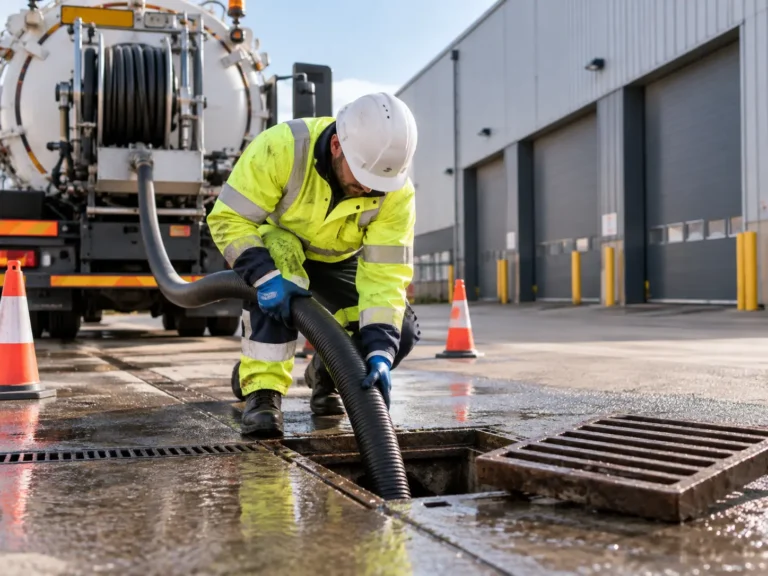
Restaurants, pubs, offices, landlords and managing agents: planned maintenance and out-of-hours call-outs.
Call and speak to the engineer, 24 hours a day, including tonight.