- Phone answered 24/7, including nights, weekends and bank holidays
- Drainage across London, with plumbing alongside
An outside drain that is overflowing, a gully that will not take water, or an inspection chamber standing full. These tell you more about where the blockage sits than anything happening indoors, and they can help show whether the pipe is yours or Thames Water’s.
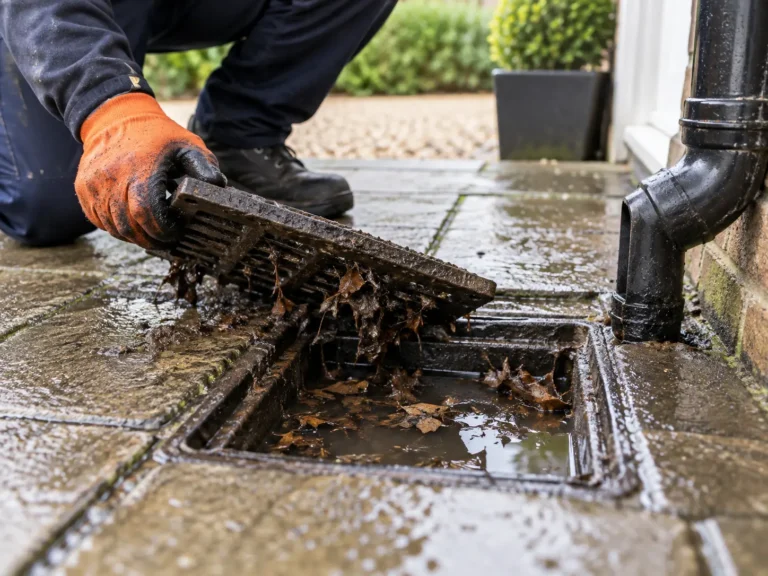
The gully pot or the pipe below it is blocked. If it only happens in heavy rain, silt and leaves are the usual cause.
A blockage downstream of that chamber. Check whether the next chamber towards the road is also full. It narrows down the location considerably.
Often a sign that surface water is getting into a foul drain, or that a combined drain is overwhelmed. Worth investigating rather than living with.
A cracked chamber, a displaced cover or a leaking joint letting foul air out. Not always a blockage, but not something to ignore.
Ground washing into a broken pipe below. This is a structural problem and clearing it will not help.
Several fixtures affected at once points to the main run outside rather than any one trap indoors.
The three things people call “the outside drain” behave differently, and telling them apart on the phone helps us bring the right kit.
An inspection chamber that is standing full of water is blocked somewhere downstream of that chamber. One that is empty and dry is clear. Working along the chambers from the house towards the boundary, the last clear chamber and the first full one put the blockage between them, which is why we ask what you can see before we set off. If every chamber on your property is full right up to the boundary, the blockage is probably beyond it, on the lateral drain or the public sewer, which is normally Thames Water’s to deal with rather than yours to pay for.
A gully that overflows only during heavy rain is usually a surface water problem rather than a foul one. Leaves and silt collect in the gully pot, the trap fills, and the water backs up over the grate. Clearing the pot and jetting the connecting pipe normally fixes it, and keeping the grate clear keeps it fixed.
A gully that overflows in dry weather is different. That is foul water from the kitchen or bathroom failing to get away, and the blockage is in the pipe below rather than in the pot. Older London properties often run kitchen waste to an open gully, and years of grease from the sink above will eventually block it solid.
Treat anything coming out of a foul drain as a health risk. Keep children and pets away from it, keep it out of the house, and wash your hands thoroughly if you have touched anything it has reached. Do not power-wash it into a garden or towards a neighbouring property. If it is spreading towards a door or an airbrick, tell us when you call, because that changes how urgent the job is.
Tell us the symptoms and your postcode. We will tell you what it sounds like, what it is likely to cost and whether it is even your responsibility.
If the blockage is on a shared drain or beyond your property boundary, it may be Thames Water’s to deal with rather than yours to pay for.
The things people ask most about blocked outside drains. If yours is not here, just call and ask.
It depends where the blockage is. Pipes within your boundary that serve only your property are normally yours. The lateral drain beyond your boundary, and drains shared with other properties, have generally been Thames Water’s responsibility since 1 October 2011, with some exceptions. If the chambers on your land are all full, the blockage is likely to be beyond your boundary, and we will tell you so.
A light square cover in a garden, carefully, yes. Do not lift a heavy cast-iron cover in a driveway or roadway without proper keys and someone with you, do not lean over an open chamber, and never leave one uncovered where a child could reach it. If you are unsure, leave it and describe what you can see instead.
Leaves. If a downpipe or a nearby tree feeds the gully, the pot silts up each year as the leaves come down and rot. Clearing it annually before winter is far cheaper than dealing with an overflow, and a gully guard helps.
Both, depending on what we find. Rods reach a soft blockage close to a chamber quickly. Jetting is better for silt, grease and root fibre, and it cleans the pipe wall rather than just making a channel through the middle.
Not necessarily. Shared drains running through gardens are common in London terraces, and since 2011 many of them have been Thames Water’s responsibility. A camera survey will trace where it runs and what connects into it, which also matters if you are planning an extension over it.
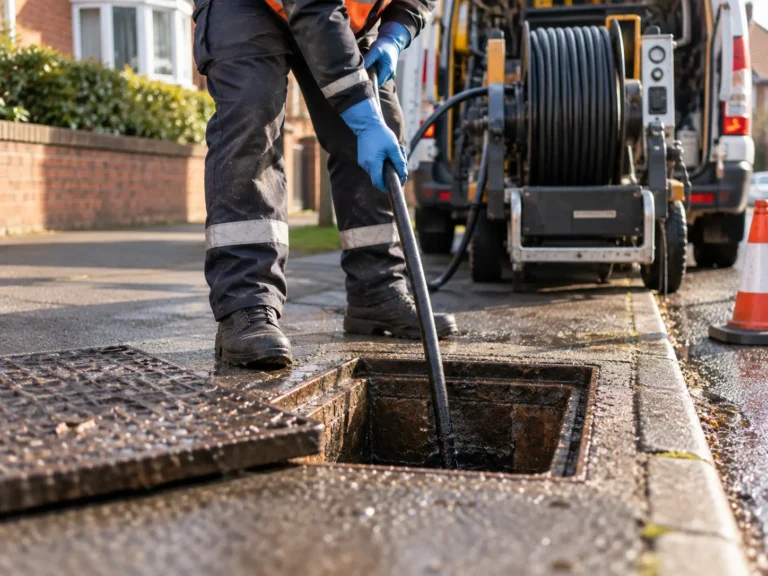
Sinks, toilets, gullies and main drains cleared, with the cause identified rather than guessed.
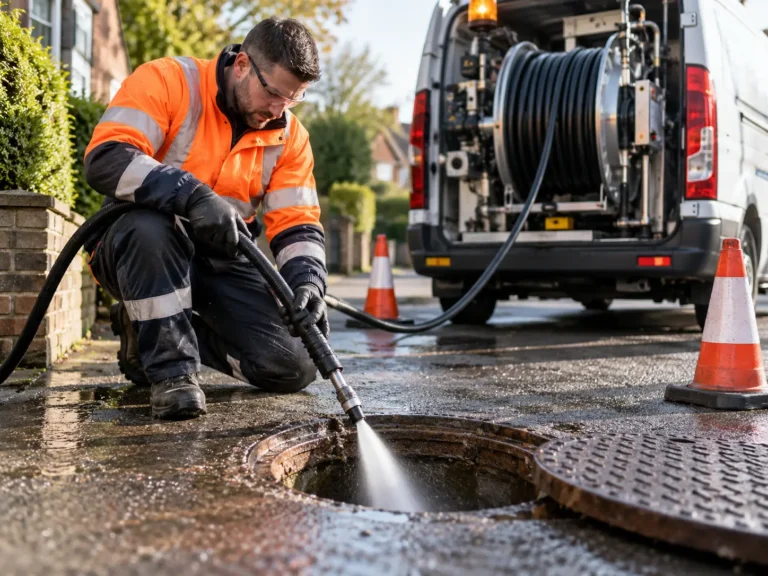
Scours grease, silt, scale and roots off the pipe wall, rather than just making a hole through the blockage.
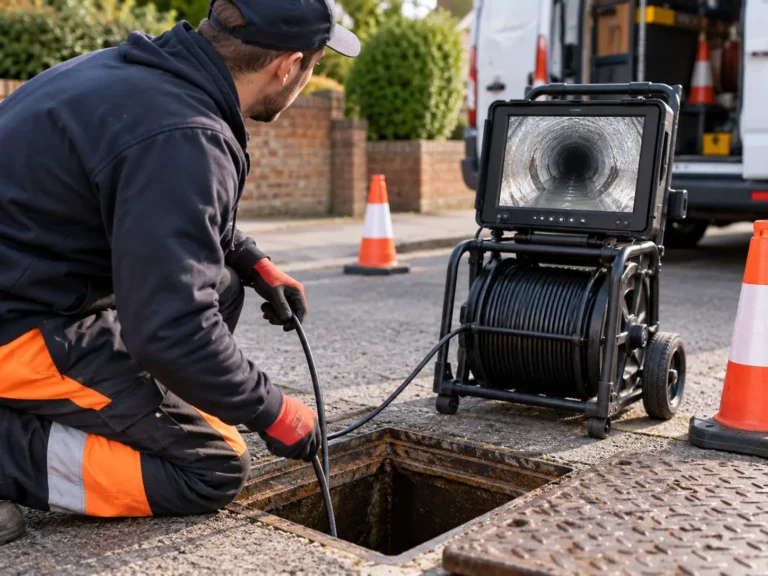
See the inside of the pipe: recurring blockages, pre-purchase checks, insurance and subsidence claims.
Call and speak to the engineer, 24 hours a day, including tonight.