- Phone answered 24/7, including nights, weekends and bank holidays
- Drainage across London, with plumbing alongside
A toilet that fills the pan and drains away slowly, or one that will not clear at all. It is the one blockage that cannot wait, particularly in a property with a single WC, and it is the one where the wrong first move causes the most mess.
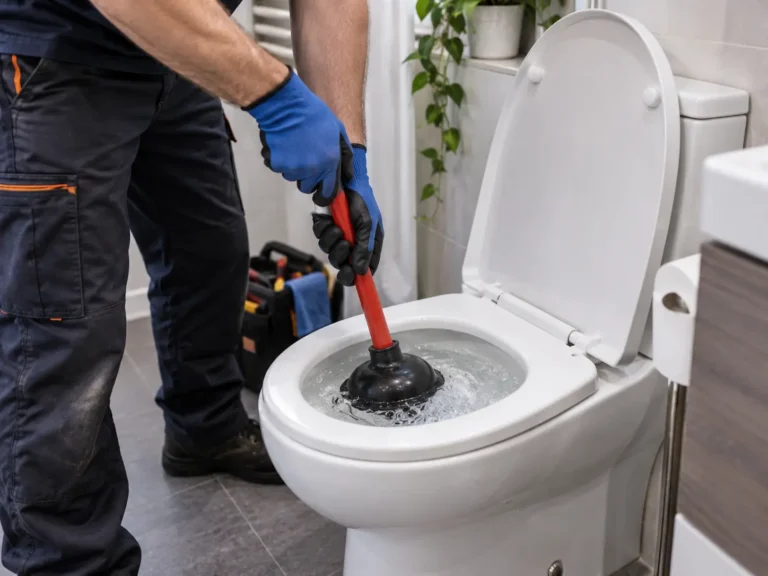
A partial blockage in the pan trap or the branch pipe. Still clearable easily at this stage.
A full blockage. Stop flushing and call, further flushes only raise the level.
Air displaced by water passing a restriction downstream. The blockage is shared, not in the toilet.
Waste taking the lowest available opening. The blockage is in the main drain, not the WC.
A partial blockage letting water past slowly. It will block completely before long.
Often a failed pan connector seal rather than a blockage, but it lets foul air into the room and should be dealt with.
This is the first thing to establish, because it changes the job completely. If the toilet is the only fixture affected and the sinks and bath still empty normally, the blockage is in the pan trap or the short branch of pipe behind it. That is a local clearance.
If the toilet is backing up and the bath or shower is also filling, the blockage is further along, in the soil stack or the main drain outside, and the toilet is simply the fixture showing it first because it is the lowest opening on that run. Clearing at the toilet will not touch it. Tell us which it is when you call and we will bring the right equipment.
Usually it is something that was never designed to break down in water.
Do not keep flushing to see if it clears. Each flush adds several more litres to a pan that already has nowhere to send it, and an overflow onto the floor turns a contained problem into a contaminated one. Do not pour caustic drain cleaner into a pan that is already full, because it will not reach the blockage and you will be left with a pan of corrosive liquid that has to be baled out by hand.
A plunger used gently on the pan outlet is worth one honest attempt. Force is not: a cracked pan, or a soil pipe pushed off its joint inside a boxed-in duct, is a much larger bill than the blockage was.
Basement conversions, loft en-suites and any WC that had to pump uphill will often be on a macerator. These block differently. They will not tolerate wipes, sanitary items or excessive paper at all, and the fault is frequently the unit rather than the pipework: a jammed blade, a failed pressure switch or a scaled-up chamber. Tell us if you have one, because the approach and the parts are not the same as a gravity WC.
Tell us the symptoms and your postcode. We will tell you what it sounds like, what it is likely to cost and whether it is even your responsibility.
If the blockage is on a shared drain or beyond your property boundary, it may be Thames Water’s to deal with rather than yours to pay for.
The things people ask most about blocked toilets. If yours is not here, just call and ask.
Yes. Many wipes sold as flushable do not break up the way toilet paper does. Unless the packet carries the water industry’s ‘Fine to Flush’ mark, put them in the bin. The safest rule is the three Ps: only pee, paper and poo go down the toilet.
Repeat blockages in the same WC usually mean something is still in the pipe catching debris: scale narrowing the outlet, a rough or displaced joint just past the pan, or a partial obstruction further down. A camera through the soil pipe will show it, and it is worth doing rather than paying to clear the same blockage repeatedly.
Usually not. Most blockages clear from the pan or through an access point on the soil pipe. If something solid is lodged in the trap and will not shift, lifting the pan may be the only way to reach it. We would talk that through with you before doing it.
The phone is answered 24 hours a day. Call and we will tell you straight away what we can do and when, rather than leaving you waiting on a callback.
No. Boiling water can crack a ceramic pan and can soften and distort a plastic pan connector or waste pipe. Hand-hot water is safe; boiling is not worth the risk.
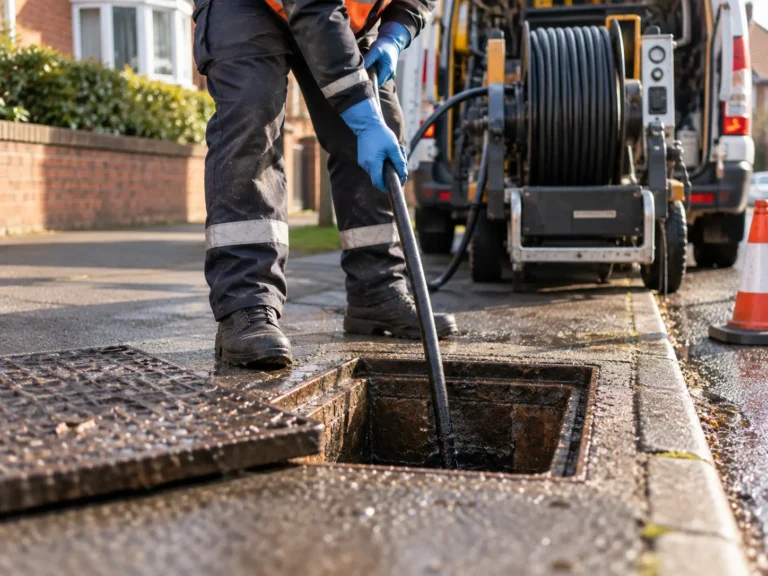
Sinks, toilets, gullies and main drains cleared, with the cause identified rather than guessed.
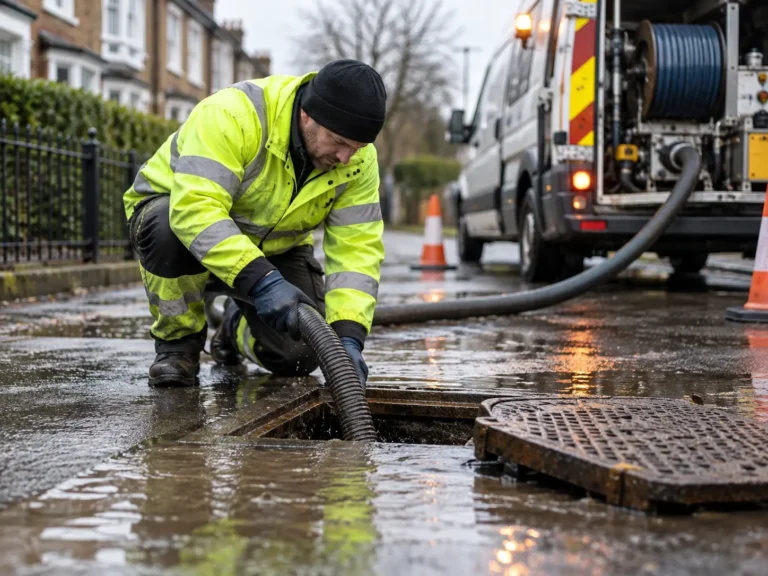
Sewage backing up, drains overflowing, or a home or business you cannot use until it is fixed. Phone answered 24/7.
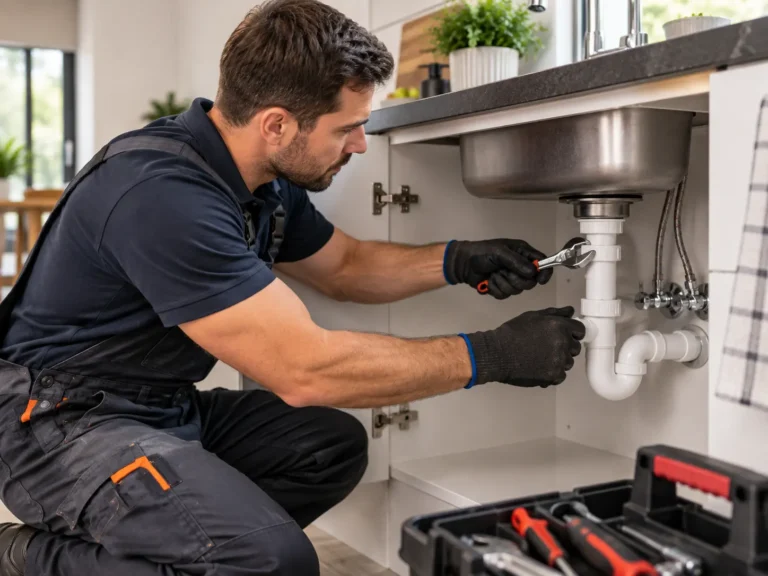
Leaks, taps, traps, toilet cisterns and waste pipes: the plumbing that often comes with a drainage job.
Call and speak to the engineer, 24 hours a day, including tonight.