- Phone answered 24/7, including nights, weekends and bank holidays
- Drainage across London, with plumbing alongside
Wastewater backing up, a drain that has stopped taking water, or a smell you cannot place. We clear blocked drains across London, work out what caused the blockage, and tell you whether it is likely to come back.
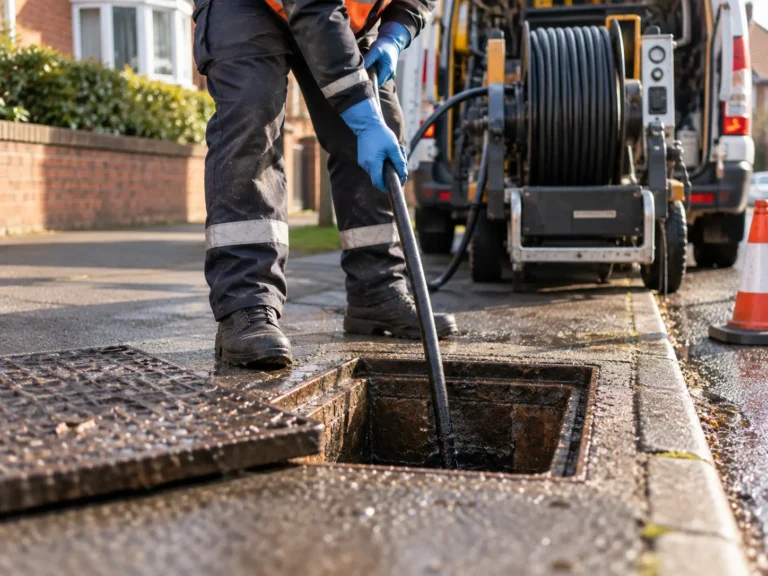
A sink, bath or toilet emptying more slowly than it used to is a partial blockage. It is far easier to clear at this stage than after it stops completely.
Air being pushed back through the trap when you run a different outlet usually means the blockage is downstream of both, in shared pipework rather than the fixture itself.
Waste from another fixture finding the lowest opening in the property. This points to the main drain rather than a local trap.
An inspection chamber that stays full is blocked downstream of that point. Which chambers are full and which are clear tells us where the problem sits.
Often a dried-out trap or a broken seal rather than a blockage, but it can also mean wastewater is sitting where it should be flowing.
A drain that blocks two or three times a year rarely has a new cause each time. Something in the pipe is catching debris, and a camera will show it.
Most blockages are cleared one of three ways, and the right choice depends on where the blockage sits and what the pipe is made of. Drain rods suit short, straight runs and soft obstructions close to an access point. High-pressure water jetting suits longer runs, congealed grease, silt and scale, because it scours the full bore of the pipe rather than punching a hole through the middle. A camera goes in when the blockage keeps returning, when the pipe does not clear as expected, or when we need to see whether something structural is behind it.
Punching a hole through a fat deposit gets the water moving, but it leaves most of the deposit in place, which is why the same drain can block again within weeks. Where the cause is build-up rather than a one-off obstruction, we would rather clear the pipe properly the first time and tell you what we found.
London’s drainage is old. Large parts of the housing stock still run on Victorian salt-glazed clay laid in short sections with mortar joints, and those joints are where roots get in and where ground movement shows up first. Newer estates run on plastic, which fails differently: displaced couplings, sagging where the bedding was poor, and damage from later building work.
This decides who pays, so it is worth knowing before anyone starts work. Since 1 October 2011, drains shared with other properties, and the lateral drain that runs from your property boundary to the public sewer, have generally been the responsibility of the water company, which across our area means Thames Water. Pipes within your boundary that serve only your property remain yours. There are exceptions, including drainage connected after July 2011, private systems that do not connect to a public sewer, and the internal drainage of a block of flats, which our guide to who pays explains. If the evidence points to Thames Water’s side, we will say so, and you can report it to them. We would rather tell you that on the phone than after we have invoiced you.
Stop running water into the affected drain, including washing machines and dishwashers on a timer, because every litre adds to what has nowhere to go. Do not keep flushing a blocked toilet. If you have already poured caustic drain cleaner down, tell us: it stays in the standing water and we need to know before we open anything up.
Tell us the symptoms and your postcode. We will tell you what it sounds like, what it is likely to cost and whether it is even your responsibility.
If the blockage is on a shared drain or beyond your property boundary, it may be Thames Water’s to deal with rather than yours to pay for.
The things people ask most about blocked drains. If yours is not here, just call and ask.
The phone is answered 24 hours a day, including nights and weekends. When you call we will tell you honestly what we can do and when, based on where you are and what else is booked. We would rather give you a realistic time than a reassuring one.
Charges depend on the job, the access and the time of day, so we discuss them with you on the phone before anything is arranged. You will know the basis of the charge before we attend, not after.
They can shift light soap or hair in a basin trap. They do very little against congealed fat, roots or a structural fault, and they leave a tank of caustic liquid sitting in your pipework that whoever opens the drain has to deal with. If it has not worked after one attempt, it is not going to.
Clearing the blockage is the first half. What came out, where it sat, and how the drain behaved while we cleared it usually tells us the cause. If it does not, or if the same drain has blocked before, a camera survey is the way to find out rather than guess.
Yes. Shared soil stacks and shared drains are common in London conversions and they need care, because clearing a blockage for one flat can push the problem into another. Tell us if the building is converted and how many flats share the stack.
Then clearing it is temporary and we will tell you that. We will explain what the camera shows, what the repair options are, and whether it is something that needs doing now or something to keep an eye on.
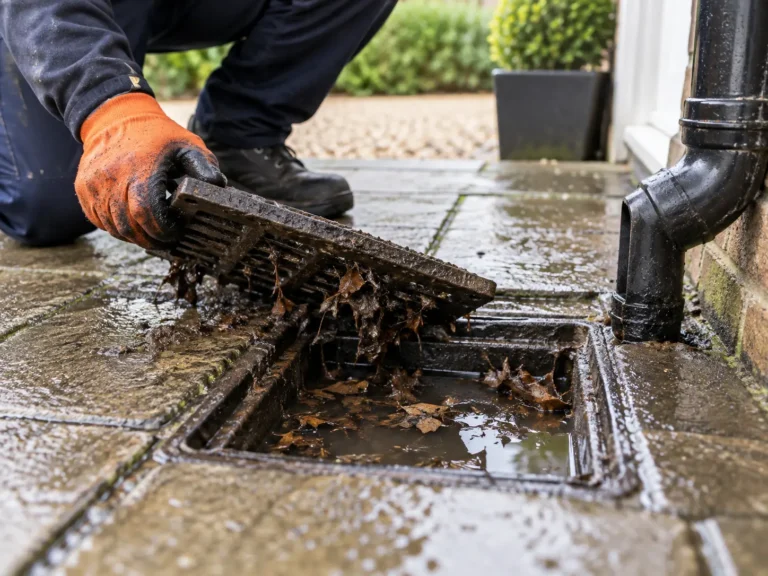
Overflowing gullies and blocked manholes or inspection chambers, cleared and explained.
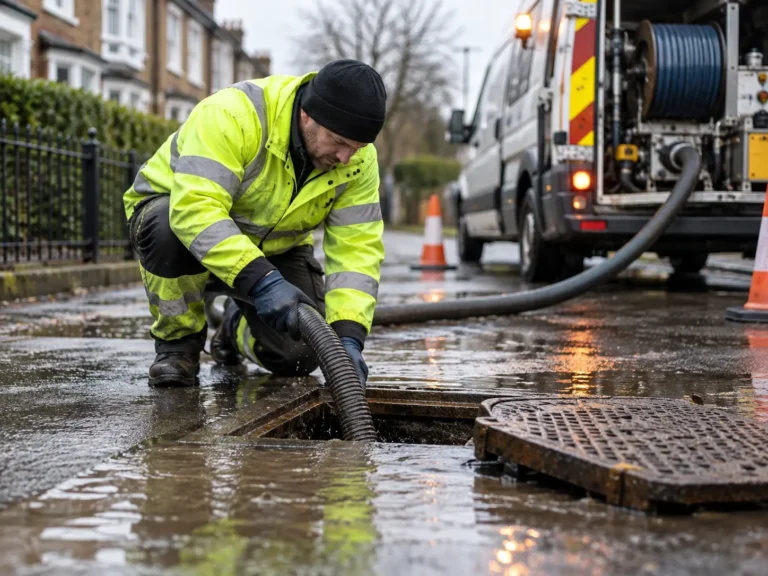
Sewage backing up, drains overflowing, or a home or business you cannot use until it is fixed. Phone answered 24/7.
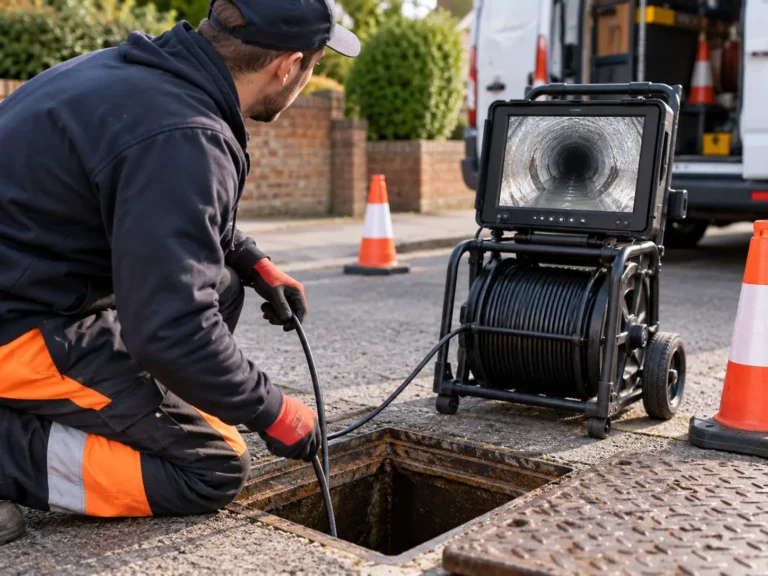
See the inside of the pipe: recurring blockages, pre-purchase checks, insurance and subsidence claims.
Call and speak to the engineer, 24 hours a day, including tonight.