Home Areas we cover Richmond
DRAINAGE IN RICHMOND

Drainage & blocked drains in Richmond

Richmond combines three things that are hard on drainage: old buildings, mature trees, and riverside streets that can flood on very high tides.

Drainage in Richmond

Much of Richmond’s housing stock is Georgian and Victorian, and much of it is listed or in a conservation area. That places real limits on what can be done above ground, and it is why lining and other no-dig repairs are worth considering here. Excavating in front of a listed building is a planning question before it is a drainage one, whereas a patch liner installed through an existing chamber is neither.

Trees are the other constant. With Richmond Park, Kew Gardens and many tree-lined streets, mature roots are close to a lot of drain runs in TW9 and TW10. Roots getting in through an open joint are a common fault, and cutting them without sealing the joint usually means they come back. The tidal Thames adds to it: some riverside streets in Richmond, Ham and Petersham can flood on the highest spring tides, and surface water drainage in those streets has to be clear going into winter.

Common drainage problems in Richmond

Listed and conservation-area property

Excavation can be restricted. No-dig lining through existing access is often the most practical repair.

Roots in old joints

Mature trees near many drain runs, with roots finding open joints in older clay pipes.

Flood risk near the river

Some riverside streets can flood on very high tides. Clear surface water drains and gullies before winter, not after.

Where we work in Richmond

This page covers Richmond, Kew, Ham and Petersham (TW9, TW10). If your postcode is on the edge of this area, call and ask rather than assuming.

Drainage problem in Richmond?

Call and speak to the engineer. 24 hours a day, including tonight.

LOCAL QUESTIONS

Drainage questions in Richmond

Common questions about drainage in Richmond, answered for the kind of property you find there.

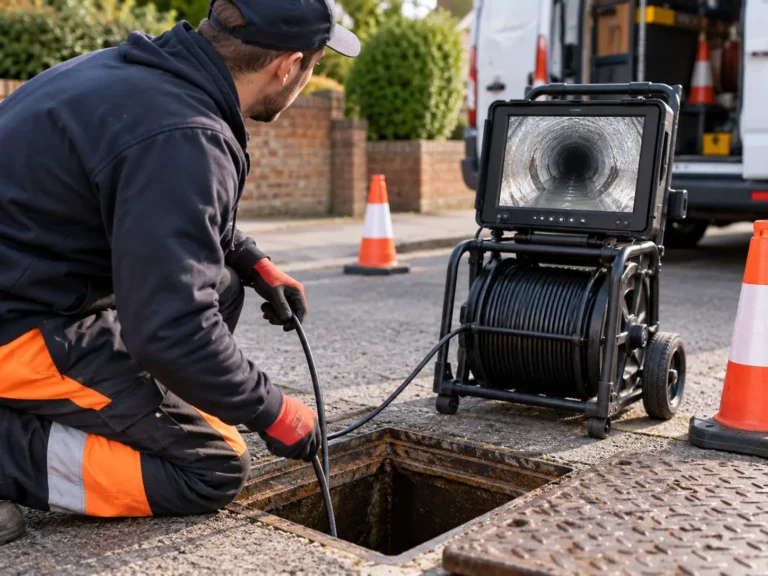
Often more than people expect, because many useful methods do not involve digging. Patch lining and relining are installed through existing inspection chambers, so a defect can be sealed without excavation and without the permissions that digging near a listed building might need. A survey first establishes whether the pipe is suitable.


It can. When the tide is high, riverside drainage has less capacity in reserve, and a gully already half full of silt has none at all. Getting surface water drains and gullies cleared before winter is the practical measure; after a flood is too late to help.

Blocked drain? Let’s get it sorted.

Call and speak to the engineer, 24 hours a day, including tonight.