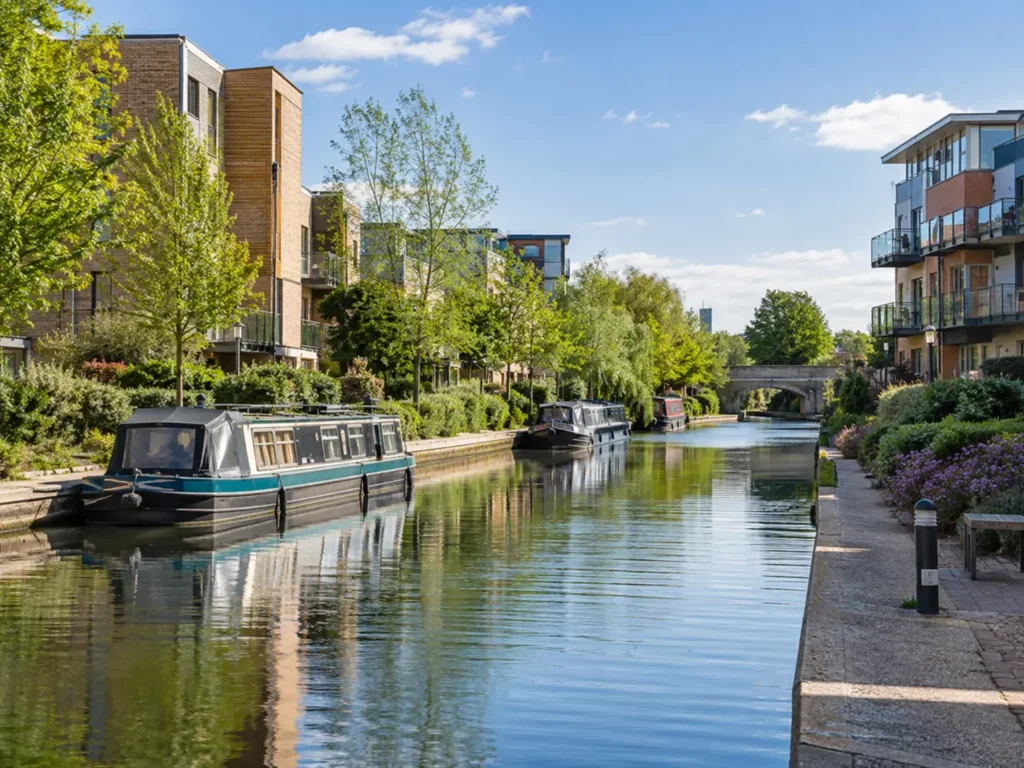
Hayes grew up around the Grand Union Canal and its factories, and the drainage still reflects that mix of old industrial sites and post-war housing.
The Grand Union runs straight through Hayes, and the industrial estates strung along it were served by drainage built for volume rather than for the mixed residential and light-commercial use much of it now carries. Old industrial drainage is often large-bore with a shallow fall, and on redeveloped sites newer buildings may have been connected into it without good records. Where a modern unit discharges into a system laid for a factory, the flow is often too low to keep the pipe scoured, and it silts.
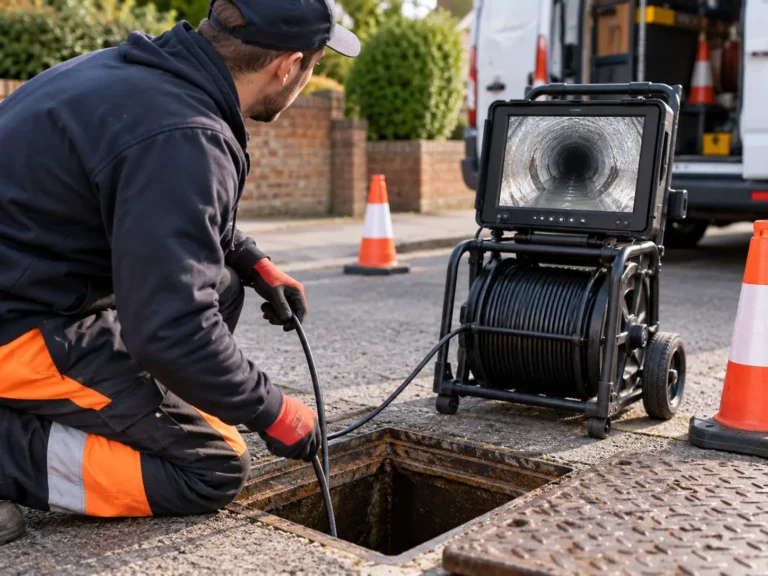
Much of the housing in UB3 and UB4 is post-war and later, including rented and shared houses, where heavier use can mean recurring blockages. Low-lying ground means surface water can be slow to get away, and yard gullies fill with grit. A CCTV drain survey will map where an old site’s drains actually go.
Large-bore systems built for factories now carrying much lower flows. They silt because there is not enough water to keep them clean.
Redeveloped works sites where later buildings were connected in without records. A survey is faster than guesswork.
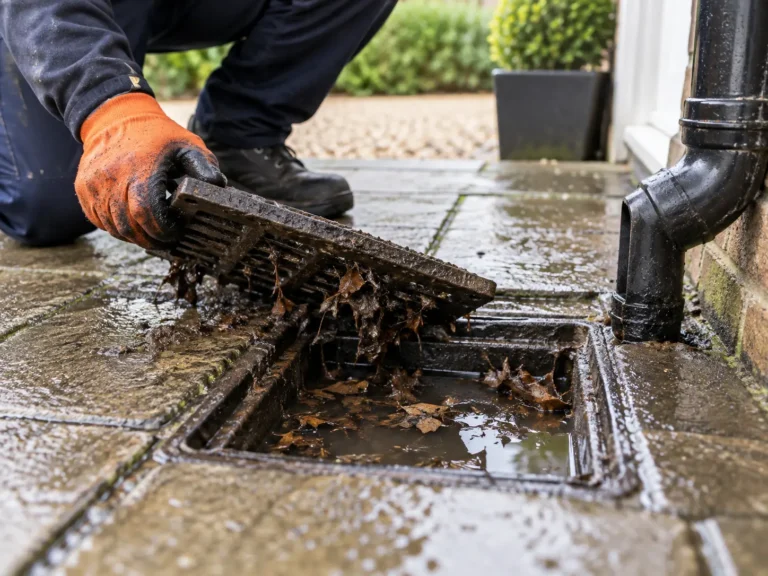
Low ground and a lot of hardstanding. Grit fills gully pots, and they are easy to forget until they overflow.
This page covers Hayes and Harlington (UB3, UB4). If your postcode is on the edge of this area, call and ask rather than assuming.
Call and speak to the engineer. 24 hours a day, including tonight.
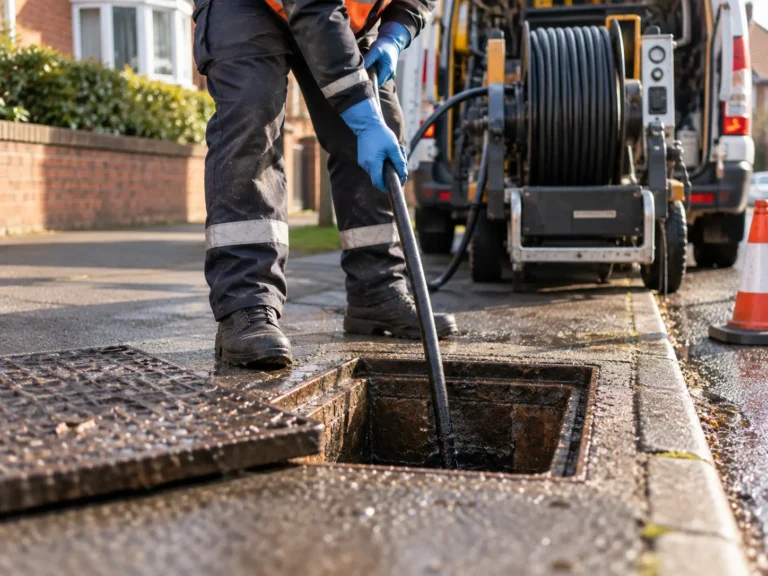
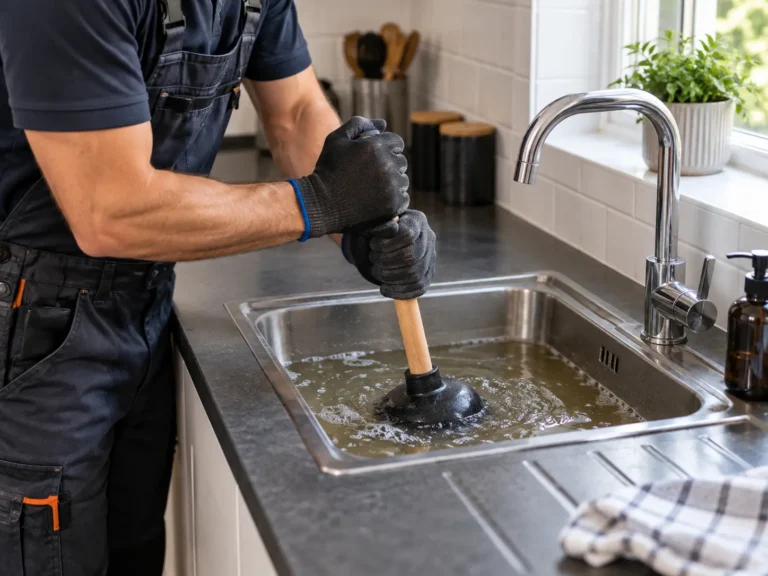
Sinks, toilets, gullies and main drains cleared, with the cause identified rather than guessed.
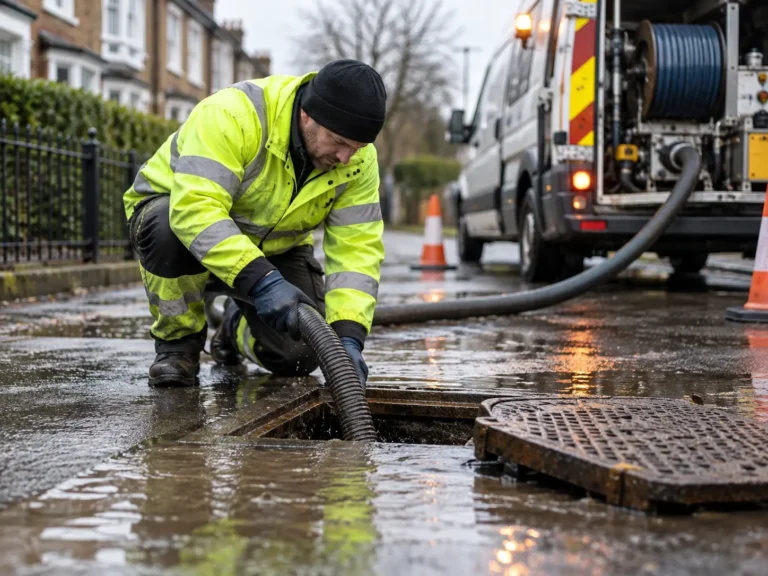
Overflowing gullies and blocked manholes or inspection chambers, cleared and explained.
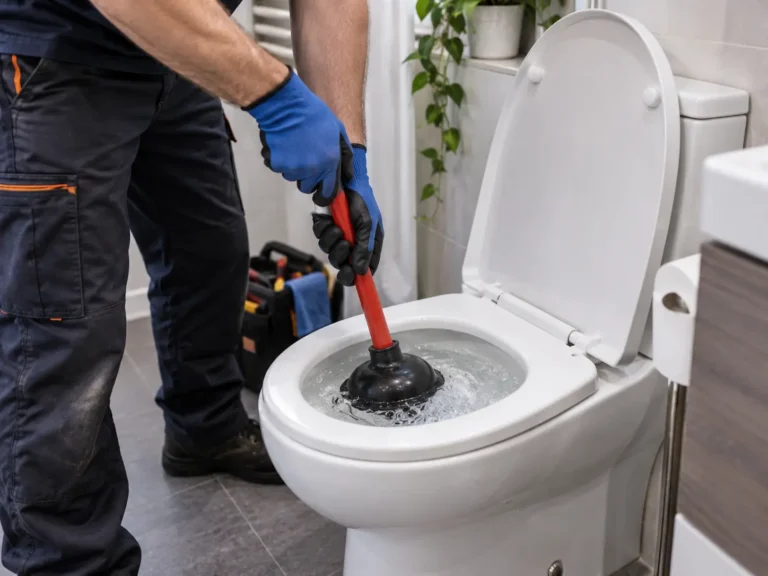
Toilets that will not flush, or that fill up and will not drain, cleared without damaging the pan or the soil pipe.
Kitchen sinks and waste pipes blocked with grease, cleared properly rather than just poked through.
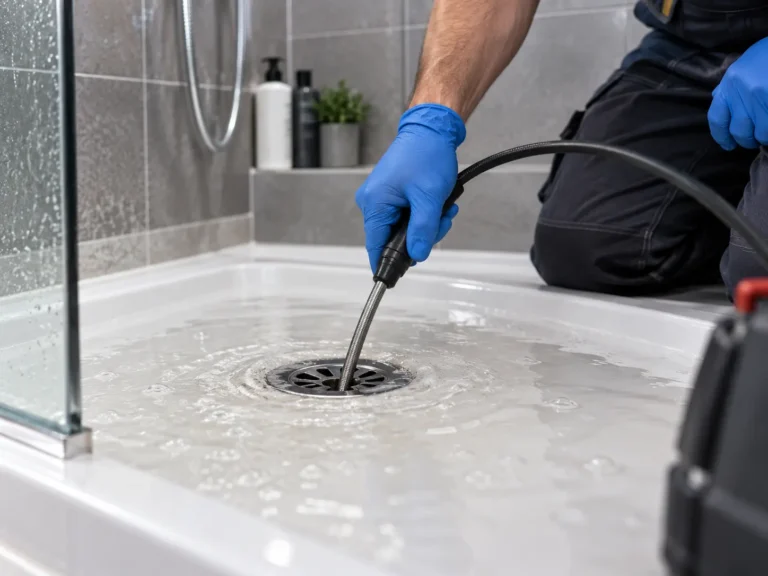
Standing water in the bath or shower tray, and slow bathroom basins, cleared at the cause.
Sewage backing up, drains overflowing, or a home or business you cannot use until it is fixed. Phone answered 24/7.
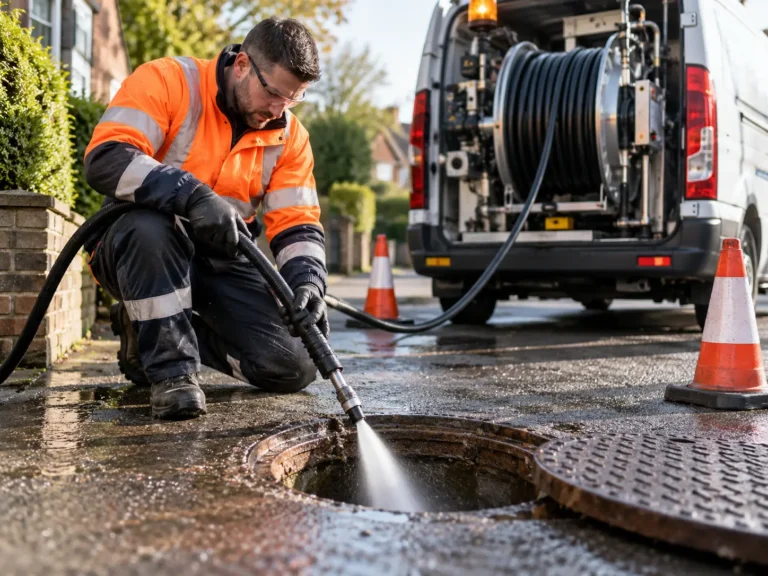
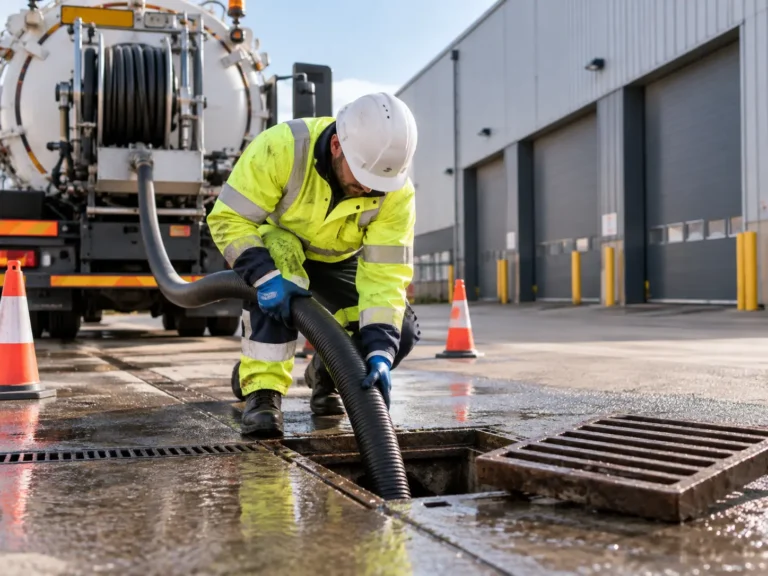
Scours grease, silt, scale and roots off the pipe wall, rather than just making a hole through the blockage.
See the inside of the pipe: recurring blockages, pre-purchase checks, insurance and subsidence claims.
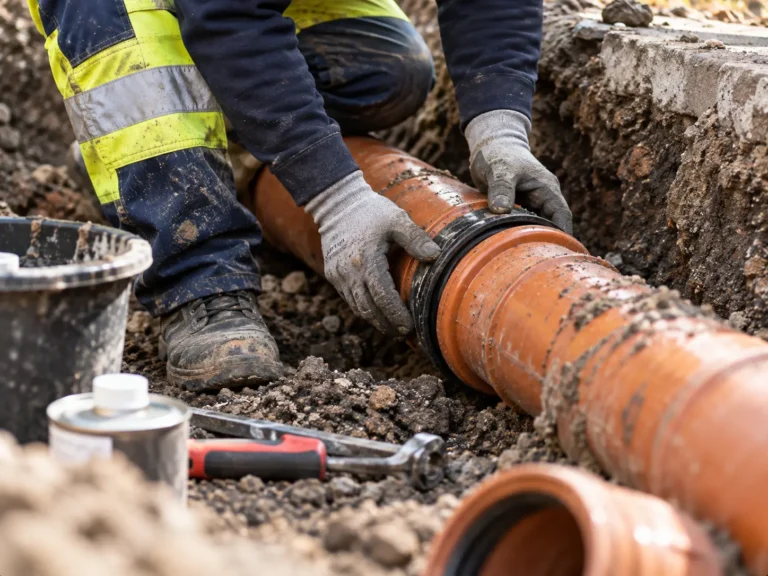
Cracked joints, root damage and collapsed sections, repaired without digging where the pipe allows.
Restaurants, pubs, offices, landlords and managing agents: planned maintenance and out-of-hours call-outs.
Leaks, taps, traps, toilet cisterns and waste pipes: the plumbing that often comes with a drainage job.
Common questions about drainage in Hayes, answered for the kind of property you find there.
Probably not blocked so much as underused. Drainage built for a factory is sized for a factory’s flow, and a modern unit discharging a fraction of that does not generate enough velocity to keep the pipe scoured. Silt settles along the bottom. Jetting cleans it properly, and a survey will tell you whether the run is sized sensibly for what you are now putting through it.
Yes, and on redeveloped industrial sites it is often one of the most useful things we do. A CCTV survey traces the runs, shows which buildings connect where, and identifies where the site meets the public sewer. That plan settles responsibility arguments and saves a great deal of time in an emergency.

Call and speak to the engineer, 24 hours a day, including tonight.