- Phone answered 24/7, including nights, weekends and bank holidays
- Drainage across London, with plumbing alongside
Kitchen sinks usually block because of fat rather than food waste: fat poured down warm as a liquid, cooling on the inside of the pipe, and narrowing it a little more with every wash-up until nothing gets past.
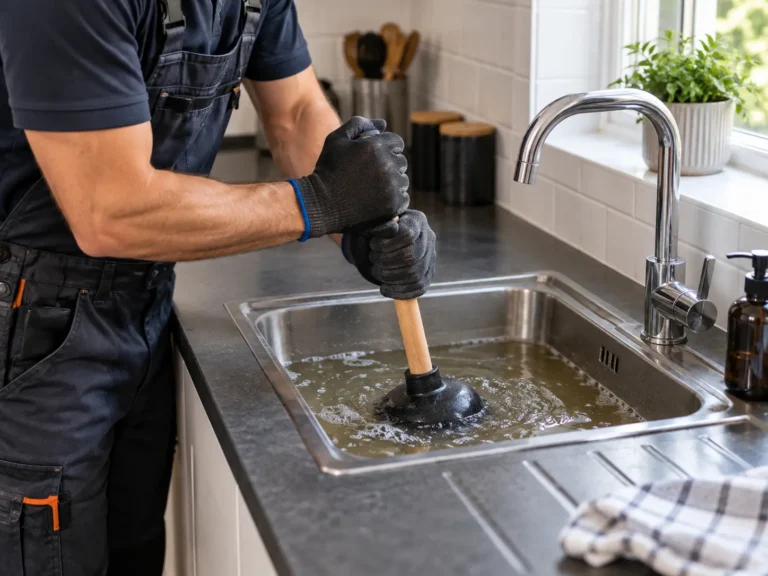
Grease narrowing the pipe. The earliest and cheapest point to deal with it.
The blockage is past the point where the two bowls join, so it is in the trap outlet or the branch pipe.
A shared waste that cannot take the discharge rate. Usually a restriction in the branch pipe rather than the machine.
Food and grease decomposing on the pipe wall. Clearing the deposit removes the smell with it.
Air being forced past a partial blockage downstream of both connections.
The blockage is outside, in the gully pot or the pipe below it, not under the sink.
Fats, oils and grease leave the pan as a liquid and reach the waste pipe still warm. A few feet along, in a cold pipe under a cold floor, they set. The deposit is not smooth: it is rough and sticky, so rice, coffee grounds, tea leaves and vegetable peelings that would otherwise have washed straight through catch on it and get held. That is why the blockage seems to appear suddenly when it has in fact been forming for months.
It is also why simply rodding a hole through the middle is a poor repair. The water runs again and the call ends, but the deposit is still lining the pipe and it will close up again. Hot water and a jetting nozzle sized for the pipe will take the fat off the wall properly, and the drain then behaves like a drain.
In a house, the order is trap, then the branch pipe through the wall, then the gully or the connection into the main run outside. The trap under the sink is the easiest to reach and the least likely to be the real problem if the sink has been slowing for weeks.
In a converted flat, the kitchen waste often joins a shared stack, and the blockage may be below your floor entirely and shared with the flat downstairs. This matters: clearing a shared stack from one flat without checking can push waste into the flat below. Tell us if you are in a conversion and whether the neighbours have noticed anything.
Let fat and oil cool and put it in the bin. A jar or an old tin works, and it takes seconds. Wipe greasy pans out with kitchen roll before washing them. Scrape plates into the bin rather than rinsing them. Run the hot tap for half a minute after a heavy wash-up so warm water carries residue past the cold section of pipe rather than leaving it there to set.
If you run a kitchen commercially, none of the above is enough on its own and a grease trap may well be required by your lease, and grease needs managing properly on site. We cover that on the commercial drainage page.
Tell us the symptoms and your postcode. We will tell you what it sounds like, what it is likely to cost and whether it is even your responsibility.
If the blockage is on a shared drain or beyond your property boundary, it may be Thames Water’s to deal with rather than yours to pay for.
The things people ask most about blocked kitchen sinks. If yours is not here, just call and ask.
It fizzes, which looks encouraging, and it can freshen a smell. It will not dissolve set fat. If the sink has been getting slower for weeks, the deposit is too substantial for a household remedy.
You can, and it is worth doing. Put a bowl underneath first. If the sink still drains slowly with a clean trap fitted, the blockage is further along in the branch pipe and that needs proper equipment to reach.
It changes them. Food comes out fine rather than in pieces, which is better at the trap and worse further along, because the fine material settles in cold horizontal runs and combines with grease. They are not a licence to put fat down the sink.
You are probably on a shared waste pipe or soil stack, which is common in converted London houses. It also means the clearance needs to be done in a way that does not push the problem into their flat.
In a home, only when it needs it. Good habits at the sink matter more. In a commercial kitchen, planned jetting on a schedule is far cheaper than an emergency closure, and we would usually suggest somewhere between every three months and twice a year, depending on how busy the kitchen is.
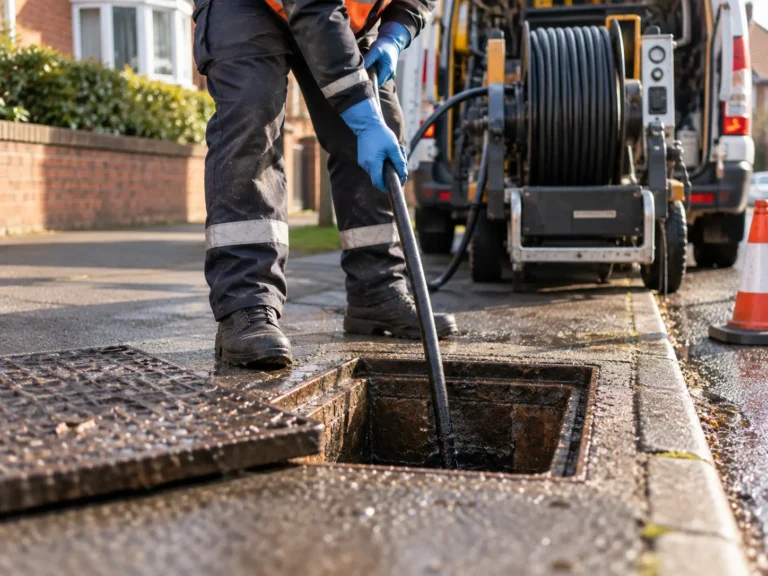
Sinks, toilets, gullies and main drains cleared, with the cause identified rather than guessed.
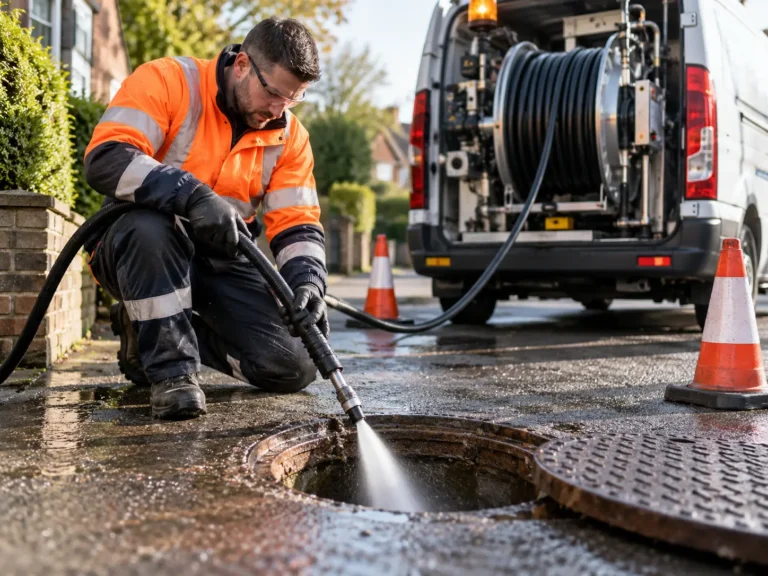
Scours grease, silt, scale and roots off the pipe wall, rather than just making a hole through the blockage.

Restaurants, pubs, offices, landlords and managing agents: planned maintenance and out-of-hours call-outs.
Call and speak to the engineer, 24 hours a day, including tonight.