- Phone answered 24/7, including nights, weekends and bank holidays
- Drainage across London, with plumbing alongside
Ankle-deep water in the shower tray, a bath that takes half an hour to empty, or a basin that holds the water long after you have pulled the plug. Bathroom blockages have a different cause to kitchen ones, and in London they have an extra factor working against them.
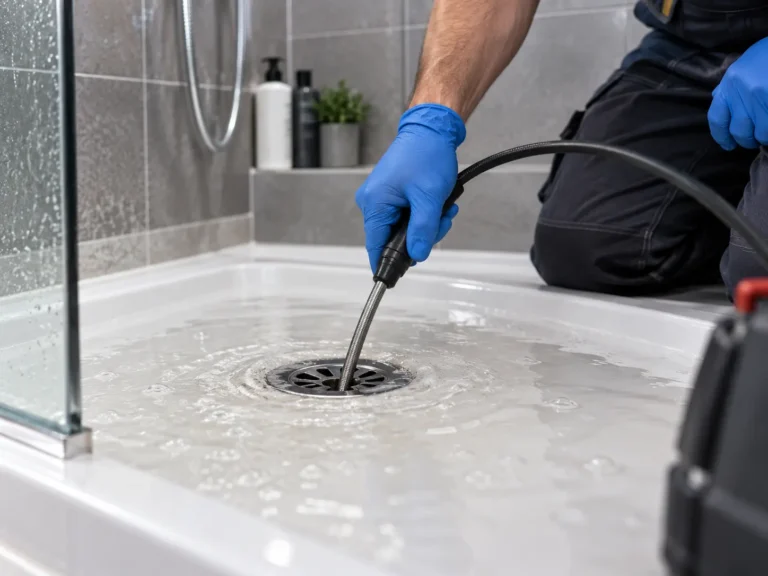
Hair and soap in the trap or the waste directly below it. Usually clearable at the fixture.
A partial blockage in the trap or the branch pipe, often with limescale narrowing it further.
Hair and toothpaste in the trap, or a pop-up waste rod obstructing the outlet.
Not a bathroom blockage. The main drain is blocked and the bath is the lowest opening.
A dry trap, a failed seal, or residue on the pipe wall. Running water into it for a minute will tell you which.
A leaking trap or tray seal rather than a blockage, and it needs attention before the ceiling does.
Hair is the frame and soap is the binder. Hair collects across the grating and in the trap, and residue from soap, shower gel, conditioner and shampoo coats it into a dense mat that water struggles to pass. On its own that is a straightforward clearance.
Hard water makes it worse, and most of London has hard water. The scale you see in a kettle also builds up on the inside of waste pipes. A scaled pipe has a rough surface instead of a smooth one, and everything that passes has something to catch on. It is one reason bathroom wastes in hard water areas can block more readily, and why a bathroom that was fine for years can start blocking regularly.
Bathroom traps are usually the least accessible in the property. A shower tray sits on a plinth or is set into the floor, and the trap underneath may only be reachable through an inspection hatch, if one was fitted. Bath traps sit under the bath behind a panel, and in a tiled-in bath there is sometimes no access at all without cutting one.
This is worth knowing before anyone starts. We would rather clear the waste through the plughole and the branch pipe than take a bath panel off, and that often works. Where it does not, we will tell you what access is needed and what it involves before doing anything irreversible.
If the bath or shower fills up when you flush the toilet or empty the basin, the bathroom waste is not blocked. The bath is simply the lowest opening on a run that is blocked further downstream, and the water is coming back up through it. Clearing the bath trap will not help. Mention this when you call, because it moves the job outside to the main drain.
Tell us the symptoms and your postcode. We will tell you what it sounds like, what it is likely to cost and whether it is even your responsibility.
If the blockage is on a shared drain or beyond your property boundary, it may be Thames Water’s to deal with rather than yours to pay for.
The things people ask most about blocked baths and showers. If yours is not here, just call and ask.
Hard water. London’s supply leaves scale inside waste pipes as well as in kettles and shower heads, and a scaled pipe gives hair and soap residue a rough surface to grip. It is one reason bathroom wastes in London can need clearing more often.
A small plastic hair-removal strip through the plughole is safe and often effective. A metal snake is not, on a bathroom waste. It will scratch an acrylic tray, can punch through corroded pipework in a period property, and can push a hair mat further along into a less accessible section.
Usually not. Most bath and shower blockages clear through the plughole and the branch pipe. If access is genuinely needed we will say so first and explain what is involved, rather than starting to remove things and telling you afterwards.
It would reduce further scale build-up throughout the property and it has other benefits in a hard water area, but it will not remove what has already formed. It is a sensible long-term measure rather than a fix for a blocked waste.
That is not the bath. The main drain is blocked and waste is backing up through the lowest opening in the property, which is usually the bath or shower. That needs looking at outside, and it will get worse with use.
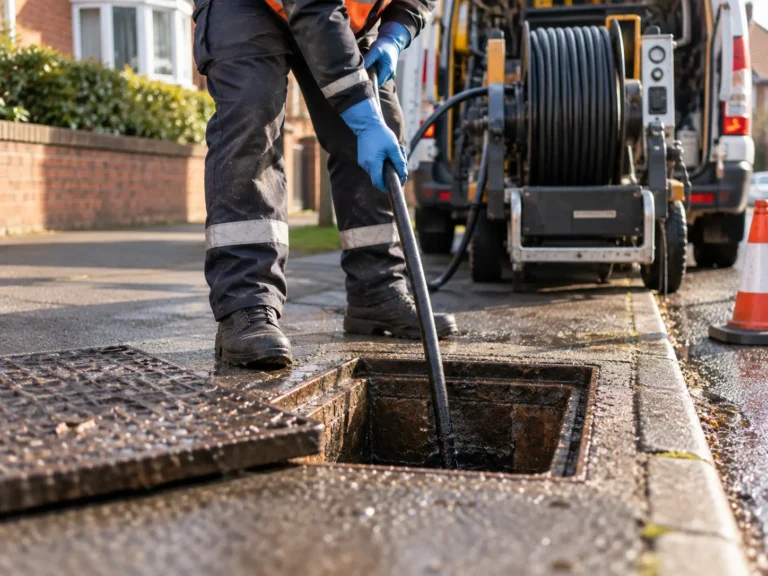
Sinks, toilets, gullies and main drains cleared, with the cause identified rather than guessed.
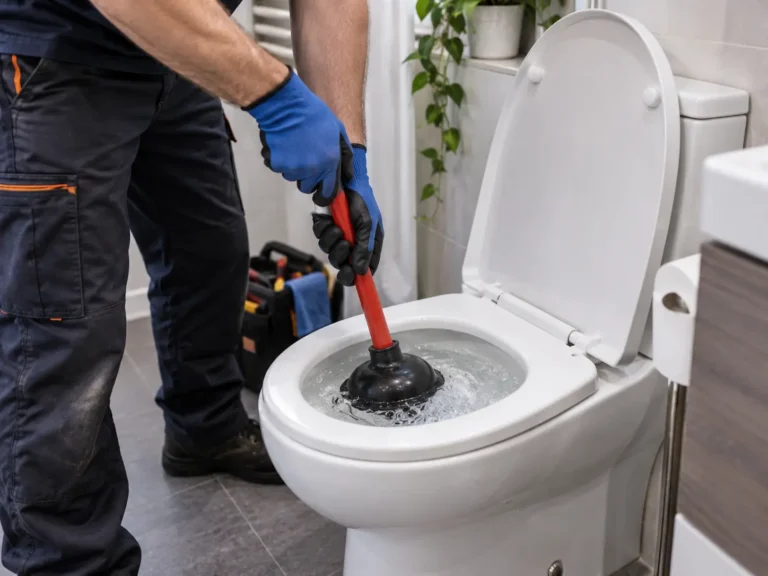
Toilets that will not flush, or that fill up and will not drain, cleared without damaging the pan or the soil pipe.
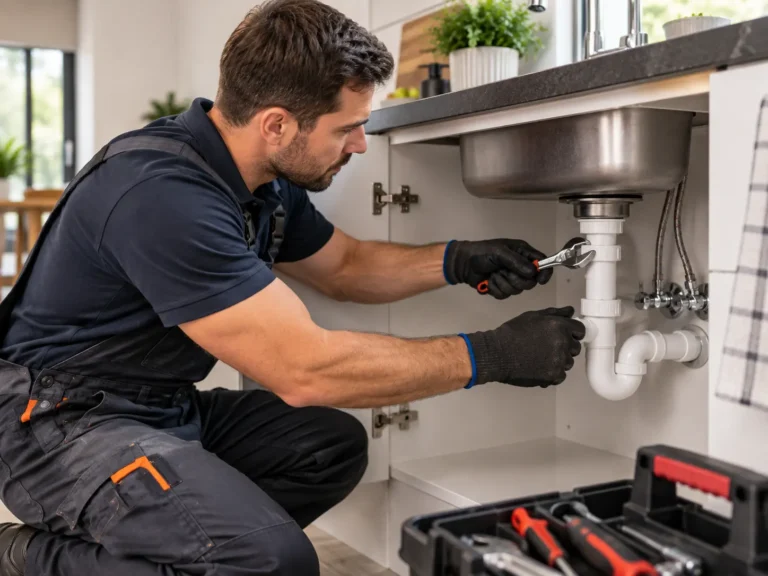
Leaks, taps, traps, toilet cisterns and waste pipes: the plumbing that often comes with a drainage job.
Call and speak to the engineer, 24 hours a day, including tonight.