Home Areas we cover Hampton
DRAINAGE IN HAMPTON

Drainage & blocked drains in Hampton

Hampton sits beside the Thames on river gravel, and near the river the water table can be close enough to the surface to affect the drains.

Drainage in Hampton

Near the river the ground can be wet and the water table high, particularly in winter. Drainage laid into it has a specific failure mode: where a joint has opened below the water line the pipe takes groundwater in continuously, runs part-full, loses the flow velocity that keeps it scoured, and silts up. It can look like a drain that keeps blocking for no reason, and clearing it again will not hold while water is still getting in.

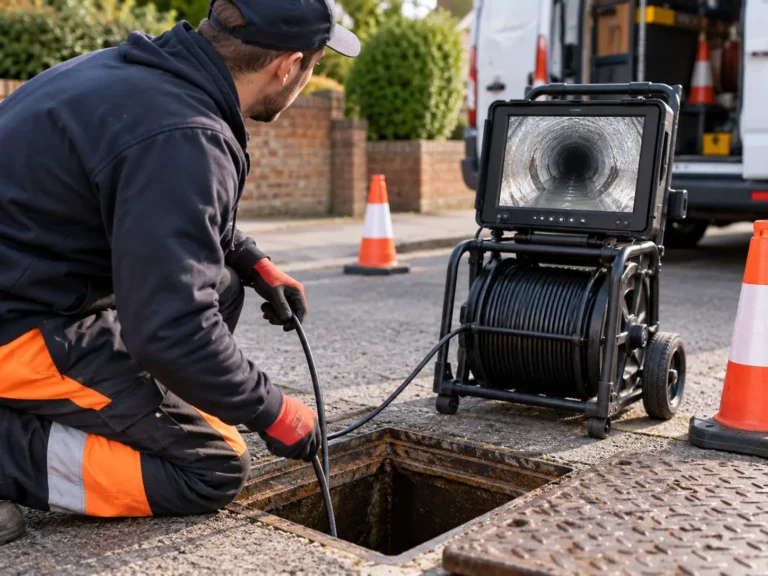
The housing is a mix of older riverside property around Hampton village and the church, and extensive interwar and post-war building spreading inland through Hampton Hill. The older stock has Victorian clay with open joints; the interwar estates have their own clay with the shrink-swell cracking that goes with the ground. Hampton also has larger properties with long private drainage runs, where the distance between access points is often the practical constraint on clearing anything. A CCTV drain survey will show whether water is getting in, and a patch repair can seal the joint.

Common drainage problems in Hampton

High water table on river gravel

Groundwater can get in through open joints, so the drain does not run clean and silt keeps returning.

Repeat silting rather than blockage

The tell-tale of infiltration. Clearing treats the symptom; sealing the joint fixes it.

Long runs on larger plots

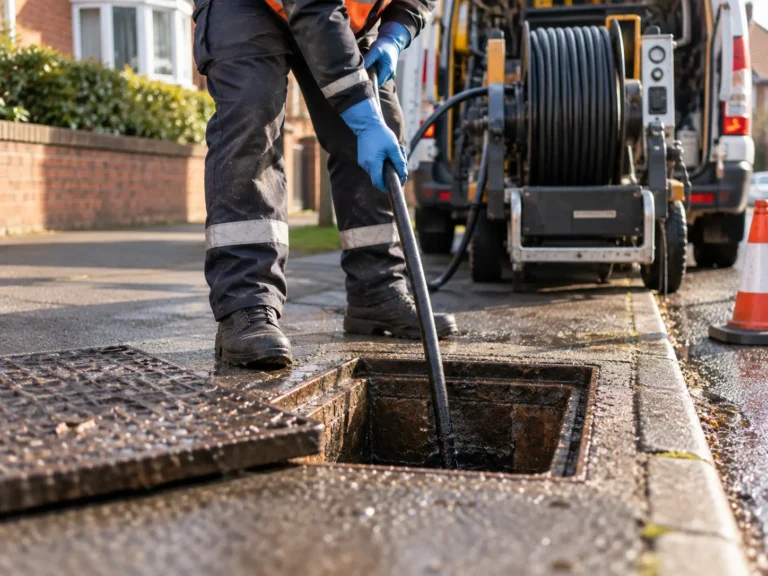
Distance between access points limits what rods can reach, particularly on the older riverside properties.

Where we work in Hampton

This page covers Hampton and Hampton Hill (TW12). If your postcode is on the edge of this area, call and ask rather than assuming.

Drainage problem in Hampton?

Call and speak to the engineer. 24 hours a day, including tonight.

LOCAL QUESTIONS

Drainage questions in Hampton

Common questions about drainage in Hampton, answered for the kind of property you find there.

That often points to groundwater rather than misuse. On river gravel with a high water table, a joint that has opened below the water line lets water into the pipe continuously. It sits part-full, stops self-cleansing and silts. A survey finds the defect and a patch liner seals it, which is what breaks the cycle.


You cannot lower it, but you can keep it out of the pipe. Lining seals the specific joint or crack that is letting water in and restores normal flow. It is installed through existing chambers, so there is no excavation, which matters on ground that is already wet.

Blocked drain? Let’s get it sorted.

Call and speak to the engineer, 24 hours a day, including tonight.