- Phone answered 24/7, including nights, weekends and bank holidays
- Drainage across London, with plumbing alongside
Home › Who pays for a blocked drain?
Many people assume every blocked drain on their property is theirs to pay for. Since the rules changed in 2011, that is often not the case. This guide explains who is normally responsible for which pipe, the main exceptions, and how to check before you pay anyone.
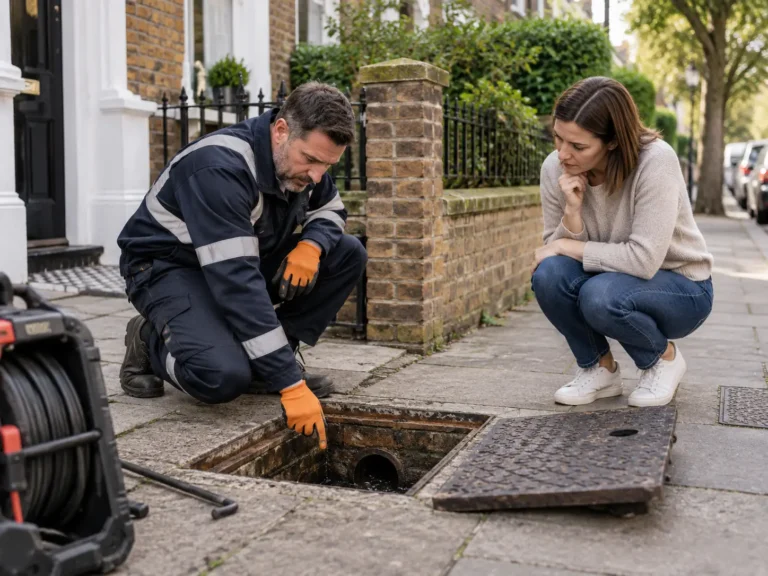
If the blocked pipe is within your property boundary and serves only your property, it is normally yours to sort out. If it serves more than one property, or it is the section beyond your boundary that connects to the public sewer, it is generally Thames Water’s responsibility, provided it was connected to the public sewer by 1 July 2011. There are exceptions, covered below, which is why it is worth establishing where a blockage actually is before anyone starts work.
Before 2011, property owners were responsible for private sewers and lateral drains, including shared runs serving a whole terrace, which led to disputes when a shared pipe failed and nobody could agree who should pay. On 1 October 2011, private sewers and lateral drains that were connected to the public sewer on 1 July 2011 transferred to the regional water and sewerage companies across England and Wales. Across London, and the rest of the area we cover, that means Thames Water. The transfer was automatic, so nobody had to apply for it. Private pumping stations that met the criteria followed by 1 October 2016.
Most responsibility questions come down to which of these three you are dealing with.
The inspection chambers (manholes) on your property will often tell you, and you can sometimes work it out before anyone attends. Starting at the chamber nearest the house and working towards the road, lift each cover you can safely lift and look. A chamber standing full of water is blocked somewhere downstream of it. A chamber that is empty and flowing is clear. If the chambers nearest the house are full but the one at the boundary is clear, the blockage is on your section and is likely to be yours. If every chamber right up to the boundary is full, the blockage is probably beyond your boundary, which usually makes it Thames Water’s to deal with.
Lift only light covers you can manage safely, never lean over an open chamber, and never leave one uncovered. If you cannot check safely, tell us what you can see and we will help you work it out on the phone.
Some situations do not fit neatly. Drainage connected to the public sewer after 1 July 2011, such as a newer estate or a run laid for an extension, did not transfer and generally stays private unless it has been formally adopted. Pipes that run to a septic tank, cesspit or private treatment plant rather than a public sewer remain the owner’s responsibility, as do surface water pipes that discharge to a soakaway or a watercourse. Road gullies and highway drains are normally the responsibility of the local highway authority, or Transport for London on its roads, rather than the water company.
Blocks of flats need care. The drainage inside a building, and often the shared drainage within its grounds, generally stays with the freeholder or management company, with Thames Water’s responsibility starting further downstream. In a leasehold flat the question is as much about your lease as about water industry rules: pipework serving only your flat is typically yours, while shared stacks are usually the freeholder’s, funded through the service charge. If you are a leaseholder, photograph everything and tell your managing agent, but do not wait for them before you stop water going into a system that is already backing up.
Contact Thames Water. They run a 24-hour line for sewer flooding and blockages, and if the problem is on pipework they are responsible for, they will investigate and deal with it. Tell them what you have seen, particularly which chambers are full and which are clear, because that is the evidence that points to their side. If a contractor has already attended, any camera footage and the location of the blockage will help. If Thames Water find the problem is on your private pipework, it will be yours to sort out.
It costs us work. A householder who finds out the blockage is Thames Water’s does not need us, and we have spent a phone call establishing that for nothing. We would still rather do it that way. Charging someone for a job that was never theirs to pay for is not how we want to run the business, and people who have been pointed in the right direction tend to remember it when they have a problem that genuinely is theirs.
Describe what you can see in your inspection chambers and we will tell you on the phone. No charge for that conversation.
The situations that come up most once people realise the drain may not be theirs.
Not normally. Where the blockage is on a lateral drain or shared sewer that Thames Water is responsible for, dealing with it is part of the service your sewerage charges already pay for. If they find the problem is on your private pipework instead, it is yours to sort out, which is why it is worth establishing whose pipe it is first.
Not necessarily. What matters is whether the pipe serves more than one property, not whose land it crosses. Thames Water says it is responsible for sewers you share with your neighbours even where they run under your garden or driveway, provided they were connected to the public sewer by 1 July 2011. It is worth checking before you pay for anything.
On a shared sewer that Thames Water is responsible for, clearing it is normally their job, whoever caused it. If one household has clearly caused damage, that can become a civil matter between you, but the clearance itself still sits with Thames Water.
It depends on the building and the lease. The drainage inside a block, and often the shared drainage within its grounds, generally stays with the freeholder or management company, funded through the service charge, while pipework serving only your flat is usually the leaseholder’s. Thames Water’s responsibility normally starts outside the building’s grounds. Your lease is what settles the detail.
Probably not. The 2011 transfer covered sewers and lateral drains connected to the public sewer by 1 July 2011. Drainage connected after that date generally remains private unless it has been formally adopted by Thames Water, which new developments sometimes arrange through an adoption agreement.
Often, from what you can see in your chambers. Where it is genuinely unclear, a CCTV drain survey traces the run and shows where it crosses your boundary and what else connects into it, which usually settles the question.
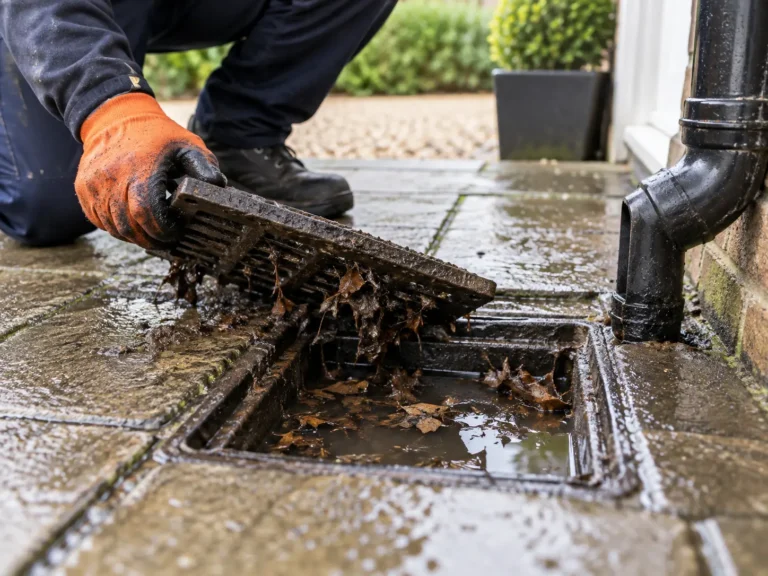
Overflowing gullies and blocked manholes or inspection chambers, cleared and explained.
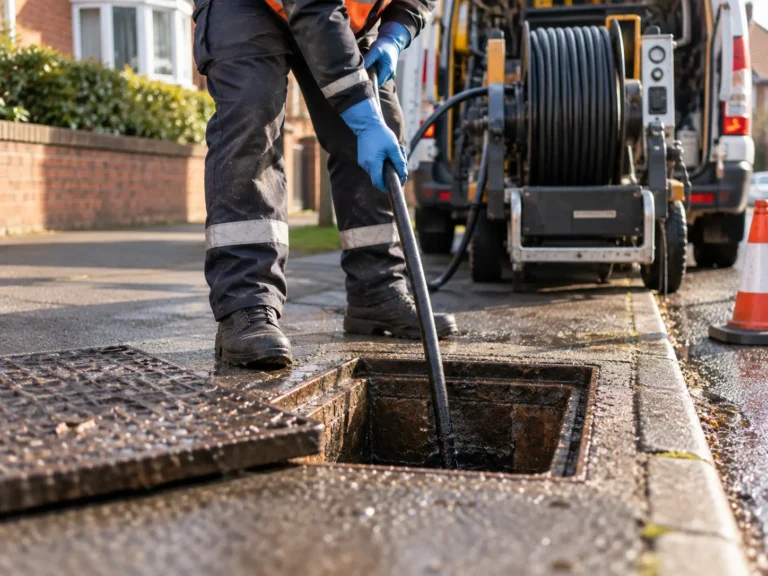
Sinks, toilets, gullies and main drains cleared, with the cause identified rather than guessed.
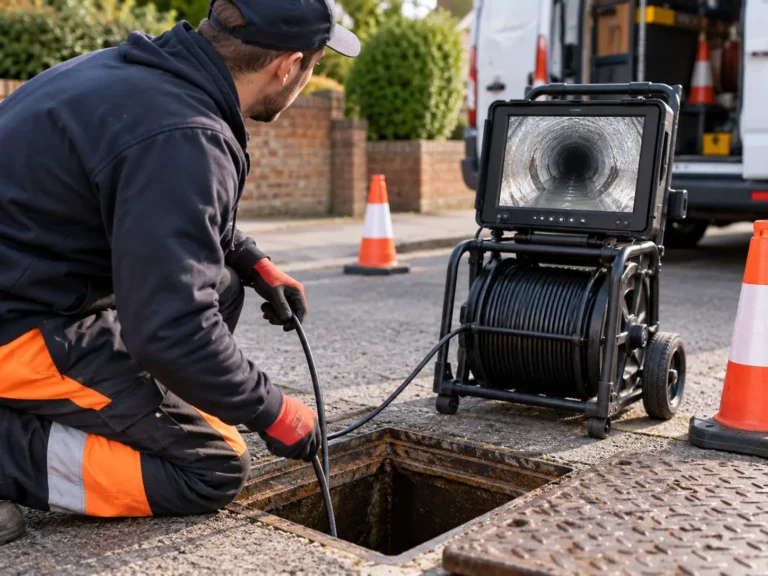
See the inside of the pipe: recurring blockages, pre-purchase checks, insurance and subsidence claims.
Call and speak to the engineer, 24 hours a day, including tonight.