- Phone answered 24/7, including nights, weekends and bank holidays
- Drainage across London, with plumbing alongside
When the pipe itself is the problem, clearing it is a temporary measure. Repairs range from a patch over a single cracked joint to relining a full section, and often the work can be done from the existing access points without digging up a garden or a driveway.
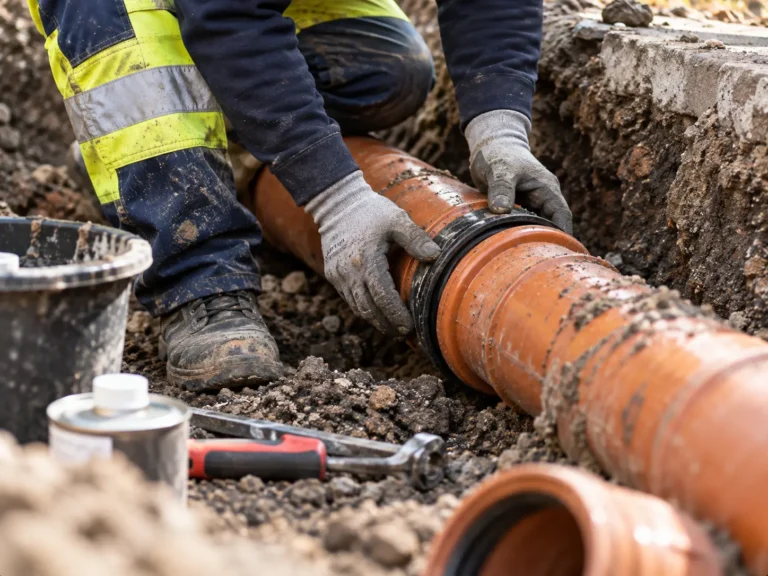
A defect holding debris. Clearing it treats the symptom; the pipe is the cause.
Ground washing into a broken pipe. This gets worse and can become a sinkhole.
A leaking drain can wash out ground and contribute to subsidence. Insurers investigate the drains for this reason.
Wastewater escaping below ground through a fracture or open joint.
A dip or a back-fall. It will silt up and block repeatedly until the fall is corrected.
They came in through a defect. Cutting them restores flow but leaves the way in open.
Much of London’s older housing still has salt-glazed clay drains, laid in short lengths with mortar joints. Clay itself lasts extremely well; the joints do not. Ground movement over a century opens them, mortar erodes, and roots find the gap. London clay soil makes this worse, because it shrinks and swells substantially with moisture and drags pipework with it, the same mechanism that causes subsidence in the buildings above.
Post-war properties bring different failures. Pitch-fibre pipe, used widely in the 1950s and 60s, deforms into an oval and delaminates internally. Plastic systems fail at couplings, or sag where the bedding was never properly compacted. Anything laid during a later extension may have been laid badly, and problems can show up within a few years.
No-dig repair is usually the first option and it is worth understanding, because it is often the difference between a day’s work and a fortnight of disruption.
A patch liner is a resin-impregnated sleeve positioned over a single defect: a cracked joint, a small fracture or a point of root ingress, and cured in place to form a rigid seal bonded to the host pipe. It suits localised faults and needs no excavation. Full relining takes the same principle along a whole section, curing a new pipe inside the old one. Both need the pipe to be structurally present and reasonably in line: they reinforce a damaged pipe, they do not rebuild a missing one.
Excavation is the honest answer where a drain has genuinely collapsed, where the run has dropped so far out of line that a liner cannot pass, or where a section has to be relaid to a proper fall. When that is the case we will say so plainly. Selling a lining job into a collapsed drain wastes your money and does not fix it.
Drain repairs are one of the areas where the bill may not be yours. Many buildings policies include cover for underground services, and where drainage damage is linked to subsidence it is usually handled within the subsidence claim. Insurers will want evidence: a CCTV survey locating the defect, referenced to a plan.
Ownership matters just as much. If the defective section is beyond your boundary, or on a drain shared with neighbouring properties, it may well be Thames Water’s to repair rather than yours. We survey first and establish where the fault actually sits before anyone talks about repairing it, because that answer decides who is paying.
If you are extending, converting a basement or laying a new drive, knowing where the drains run and what condition they are in belongs at the start of the project. Building over or near a public sewer normally needs Thames Water’s approval, work near any drain has to meet Building Regulations, and repairing a pipe you have just built a kitchen extension over is a considerably more expensive exercise than repairing it beforehand.
Tell us the symptoms and your postcode. We will tell you what it sounds like, what it is likely to cost and whether it is even your responsibility.
If the blockage is on a shared drain or beyond your property boundary, it may be Thames Water’s to deal with rather than yours to pay for.
The things people ask most about drain repairs. If yours is not here, just call and ask.
Often not. Patch lining and relining repair the pipe from the inside through existing access points, and they suit many of the defects we find. Excavation is for genuine collapses, severe misalignment, or where a section has to be relaid to a correct fall, and we will show you the footage that makes the case before recommending it.
A properly installed cured-in-place liner is a long-term structural repair, generally quoted with a design life measured in decades. What matters is that the host pipe was suitable and the preparation was done. A liner over a badly-cleaned or badly-chosen section will not perform, whatever the material claims.
It depends on your policy and the cause. Damage from subsidence or an insured event is often covered; gradual deterioration and wear usually is not. Get the survey done first: without evidence locating the defect, an insurer has nothing to assess.
Usually yes, with lining, since the work is done from access points at either end rather than from above. That is precisely why no-dig methods exist. If it has fully collapsed under the structure the options narrow considerably, which is the argument for surveying before you build.
Cutting roots restores flow without closing the joint that let them in, so they return. Sealing that joint (a patch liner over the defect) is what stops it. Otherwise you are on an annual jetting bill indefinitely.
A survey establishes where the defect sits relative to your boundary and whether the drain is shared. If it is beyond your boundary or on a drain shared with other properties, it is likely to be Thames Water’s responsibility, subject to the exceptions in our guide to who pays. We check that before recommending any work.
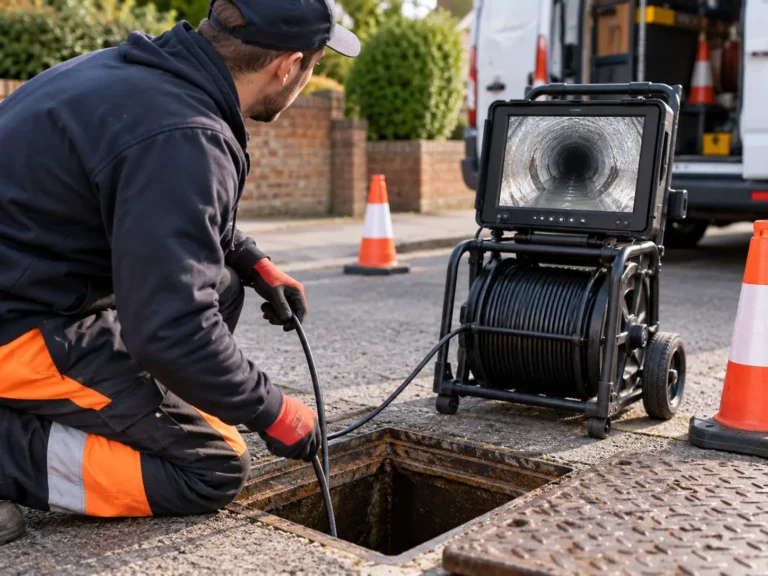
See the inside of the pipe: recurring blockages, pre-purchase checks, insurance and subsidence claims.
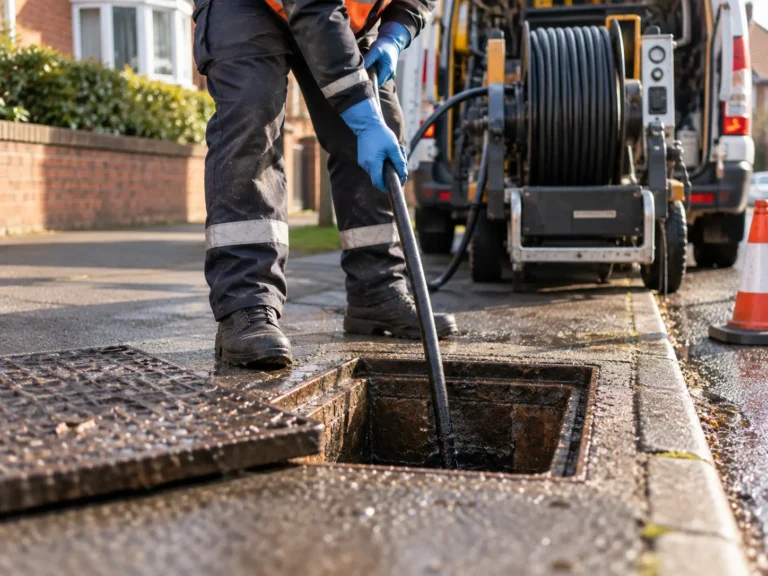
Overflowing gullies and blocked manholes or inspection chambers, cleared and explained.
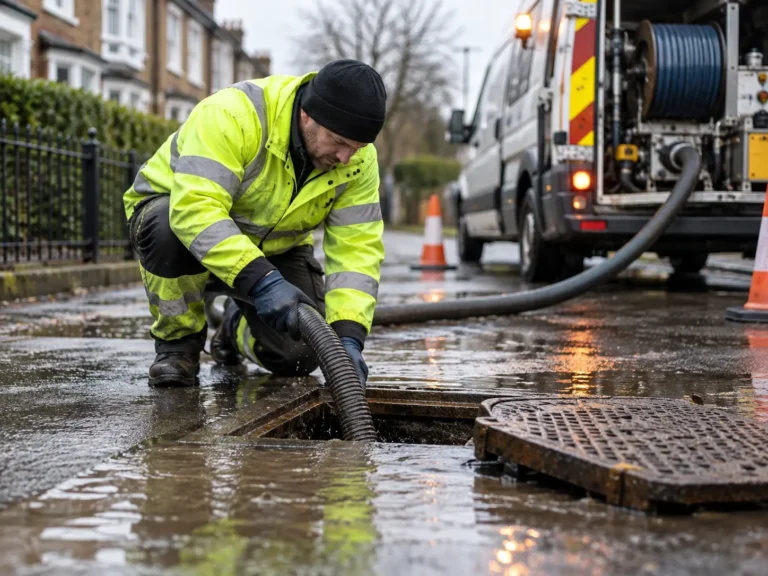
Sewage backing up, drains overflowing, or a home or business you cannot use until it is fixed. Phone answered 24/7.
Call and speak to the engineer, 24 hours a day, including tonight.