- Phone answered 24/7, including nights, weekends and bank holidays
- Drainage across London, with plumbing alongside
For a business, a drainage failure is rarely just a drainage failure. It is a kitchen that cannot serve, a floor the public cannot use, or a building full of tenants with nowhere to go. The priority is getting you trading again, then making sure it does not happen at the same time next quarter.
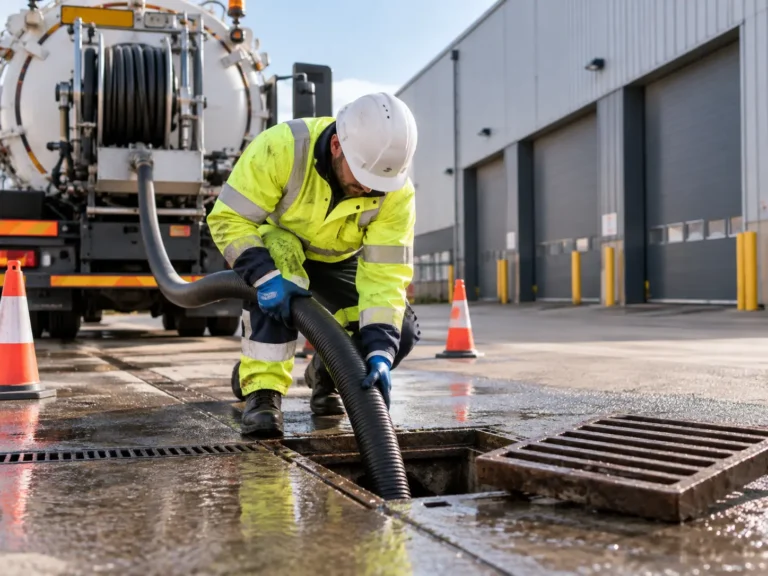
Grease build-up. It will close completely, and it will do it at the worst moment.
Overdue for emptying, or undersized for your covers. Also a compliance exposure.
Usually a shared stack or a defect in shared pipework. Worth surveying once rather than clearing four times.
Silted surface water drains or a blocked interceptor. Predictable and preventable.
A dry trap, a broken stack or a defect below ground. It generates complaints until it is found.
Get it investigated before it becomes a dilapidations dispute or a lease liability.
Fats, oils and grease are the main drainage problem in food premises, and the volumes are on a different scale to a domestic kitchen. Grease leaves the pot warm, sets in the run, and closes the line down over weeks until a service is lost. Many leases require a grease trap or separator, and building regulations guidance recommends one for commercial kitchens, but one that is not emptied and maintained on schedule does very little. It fills, stops separating, and passes everything straight through.
Planned jetting on a realistic interval is usually far cheaper than an emergency closure, and it is also the record you want if the landlord or the local authority asks how the drainage is being managed. We would rather set an interval that matches your actual covers than sell a frequency you do not need.
Managed blocks and rented property in London bring their own difficulties: shared soil stacks, shared drains, converted houses where the original drainage was never designed for the number of flats now on it, and the recurring question of whether a given pipe is the tenant’s, the leaseholder’s or the freeholder’s.
What landlords, letting agents and managing agents need from a contractor is simple access arrangements made through you rather than by chasing tenants, and a clear account of what was found and where (which stack, which chamber, which side of the boundary), with photos or footage you can pass on, so the cost lands on the right party and the same argument does not have to be had every time. Where a defect is likely to recur, we will say so rather than clearing it every quarter and invoicing every quarter.
Offices and retail units rarely have a drainage failure that stops the whole business, but a blocked washroom, a slow kitchenette sink or a smell in a shared building generates complaints quickly. We can work before opening or after closing, clear the line, survey it with a camera where the same problem keeps coming back, and give the building or facilities manager a written account of what was found.
Jetting a kitchen line at seven in the evening helps nobody. Most commercial work is better done early, late or overnight, and where the site allows it we will work to your hours rather than ours. For food premises that is usually the only sensible option, and for retail and offices it avoids doing the work twice.
The phone is answered 24 hours a day, including nights, weekends and bank holidays, and you speak to the engineer rather than a call centre. For a kitchen that cannot trade, a toilet block out of use, or wastewater coming up in a basement, yard or car park, tell us the site, the access arrangements and what is affected, and we will tell you straight away what we can do and when. If it can safely wait until the morning at a lower cost, we will say so. Our emergency drainage page covers what to do in the meantime.
Many commercial drainage emergencies are predictable: the line has been slowing for weeks, the grease trap has not been serviced, or a survey a year earlier flagged a defect that was never dealt with.
A planned schedule of jetting at an interval that suits the site, a periodic camera check on the lines that matter, and grease management that is actually followed usually costs less over a year than a single closure, and it is far easier to budget for. Where a site has a history of problems, the camera footage also shows whether the line is stable or deteriorating, which tells you whether you are managing a maintenance issue or heading for a repair.
Tell us the symptoms and your postcode. We will tell you what it sounds like, what it is likely to cost and whether it is even your responsibility.
If the blockage is on a shared drain or beyond your property boundary, it may be Thames Water’s to deal with rather than yours to pay for.
The things people ask most about commercial drainage. If yours is not here, just call and ask.
Yes, and for most food premises that is the sensible approach. Tell us your hours and site access arrangements and we will work around them.
Yes. For commercial sites, camera footage, images and a written account of what was found are usually the point of the visit: for your own records, your landlord, your insurer or your local authority.
It depends on covers, menu and how well grease is managed at source. A busy kitchen might need quarterly; a lighter operation may be fine annually. We would look at the site and the condition of the line and give you an honest interval rather than a package.
That is a matter for your lease, but it usually turns on where the defect sits. We record exactly which stack or chamber the problem was in, which is the information both parties need to settle it without argument.
We can clear and maintain the drainage and document the work, and advise on what the system needs. Consent conditions themselves sit with Thames Water and your local authority, and we would point you to them rather than guess at your obligations.
Yes. If you manage a portfolio, a single schedule across sites is easier to budget and easier to evidence than reacting to each one separately.
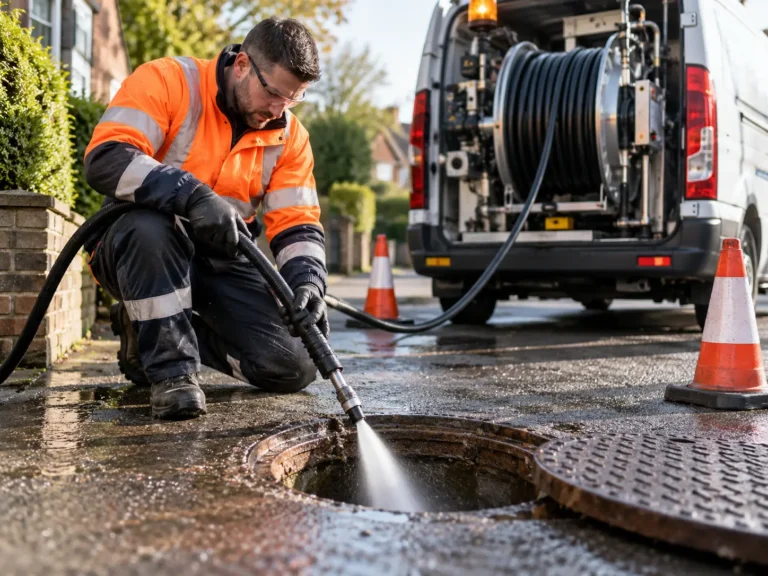
Scours grease, silt, scale and roots off the pipe wall, rather than just making a hole through the blockage.
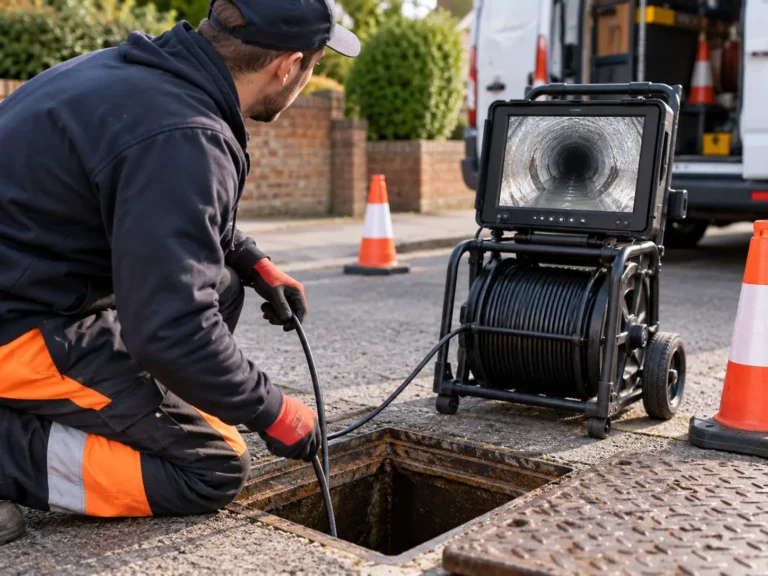
See the inside of the pipe: recurring blockages, pre-purchase checks, insurance and subsidence claims.
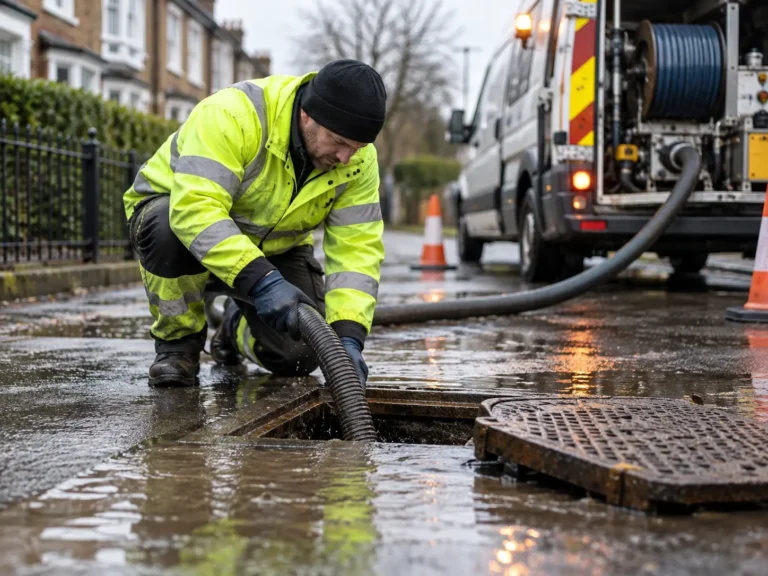
Sewage backing up, drains overflowing, or a home or business you cannot use until it is fixed. Phone answered 24/7.
Call and speak to the engineer, 24 hours a day, including tonight.