- Phone answered 24/7, including nights, weekends and bank holidays
- Drainage across London, with plumbing alongside
A camera on a flexible rod, fed through the drain, showing you exactly what is happening inside the pipe. It replaces guesswork, which matters most when you are about to spend money on a repair, buy a house, or make a claim.
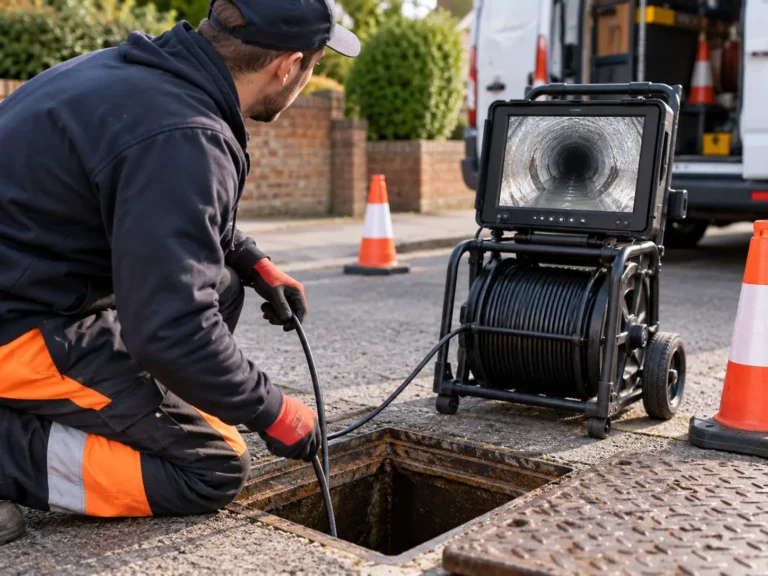
Something in the pipe is catching debris. A camera will usually show what it is.
A standard homebuyer survey does not look inside the drains, and older clay drainage can hide expensive defects.
Insurers investigating subsidence will usually want the drains checked and evidenced.
Ground washing into a broken pipe. Better found now than as a sinkhole.
You need to know what runs under the footprint before you design it, not after.
A cracked pipe or an open joint below ground can vent for a long time before anything else shows.
A drain that blocks two or three times a year does not have a new cause each time. Something in the pipe is holding debris, and until you see it you are paying to clear the same blockage repeatedly. A survey is often cheaper than paying for repeated clearances.
Before buying a property is the other clear case, and in London it is a sensible piece of due diligence. A standard homebuyer’s survey does not look inside the drains. Root damage or a partial collapse in older clay pipework can be expensive to put right, and it is much easier to negotiate on before you exchange than to discover afterwards.
The camera picks up the things that matter and that nothing else will reveal: fine root ingress at a joint, cracks and fractures, displaced or open joints where sections have moved apart, a partial or full collapse, dips in the run holding standing water, scale and grease coating the wall, and connections you did not know existed.
It also traces the layout. Where a drain runs, which properties connect into it and where it crosses your boundary is exactly what you need to know before building over it, and exactly what determines whether a defect is yours or Thames Water’s.
Footage, still images of anything significant, and an explanation in plain English of what was found and what, if anything, needs doing about it. If a defect needs action we will say how urgent it genuinely is, because "needs monitoring" and "needs repairing this month" are very different things and it is not in your interest to have them blurred together.
For an insurance or subsidence claim, tell us before the survey. Insurers generally want the defect located and referenced against a plan, and it is far easier to record that properly on the day than to go back and do it again.
A camera pushed down a drain full of standing water and debris shows you a picture of debris. If the line needs clearing first, it needs clearing first, and any survey booked for a blocked drain should include that. We would rather tell you that when you book than turn up, film some silt and invoice you for a survey that told you nothing.
Tell us the symptoms and your postcode. We will tell you what it sounds like, what it is likely to cost and whether it is even your responsibility.
If the blockage is on a shared drain or beyond your property boundary, it may be Thames Water’s to deal with rather than yours to pay for.
The things people ask most about CCTV drain surveys. If yours is not here, just call and ask.
A straightforward domestic survey is usually an hour or two on site. A larger property, a commercial site or a full trace of a shared run takes longer. If the drain has to be cleared before anything can be seen, allow for that as well.
You get the footage and images along with the explanation. If it is for an insurer, a buyer or a freeholder, you need something you can hand over. A verbal summary is no use to anyone in that position.
On anything Victorian or Edwardian, or anywhere with mature street trees, it is money well spent. Root ingress and failed joints are common in that housing stock, the repairs are expensive, and it is one of the few things a standard survey will not tell you.
Usually, yes. The survey traces the run and shows where it crosses your boundary and where other properties connect. That is usually what determines whether a defect is yours or a matter for Thames Water.
Yes. A camera cannot see through standing water and silt. If the line is blocked it has to be cleared first, and we will tell you that upfront rather than filming a blockage and charging for a survey.
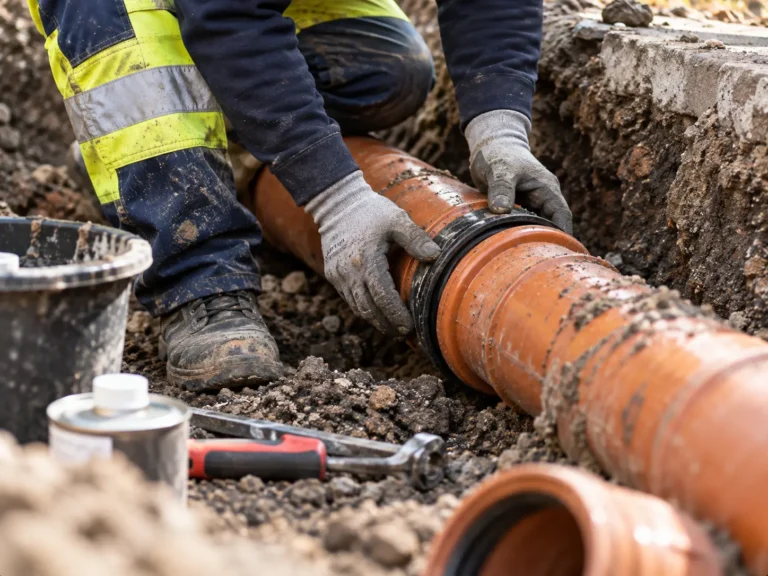
Cracked joints, root damage and collapsed sections, repaired without digging where the pipe allows.
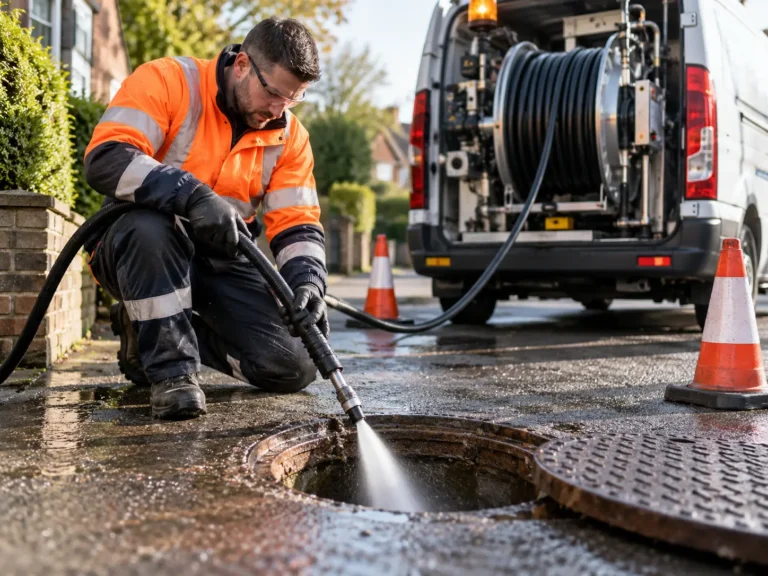
Scours grease, silt, scale and roots off the pipe wall, rather than just making a hole through the blockage.
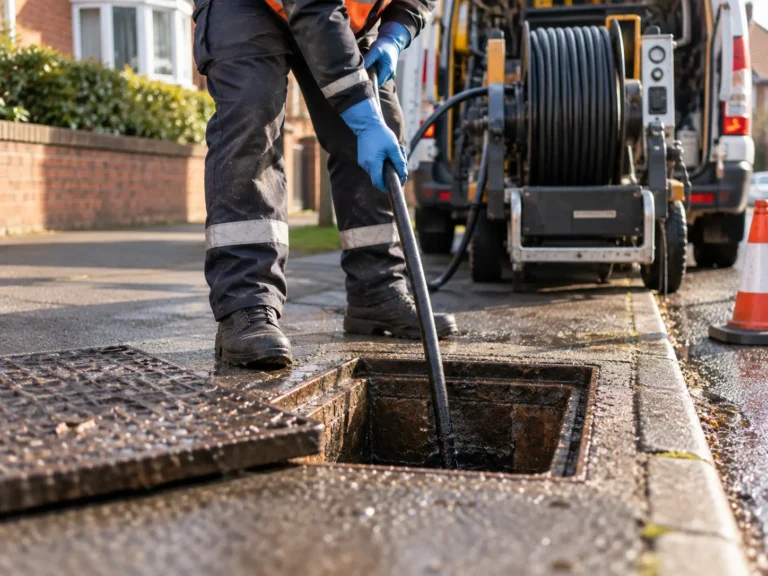
Sinks, toilets, gullies and main drains cleared, with the cause identified rather than guessed.
Call and speak to the engineer, 24 hours a day, including tonight.